
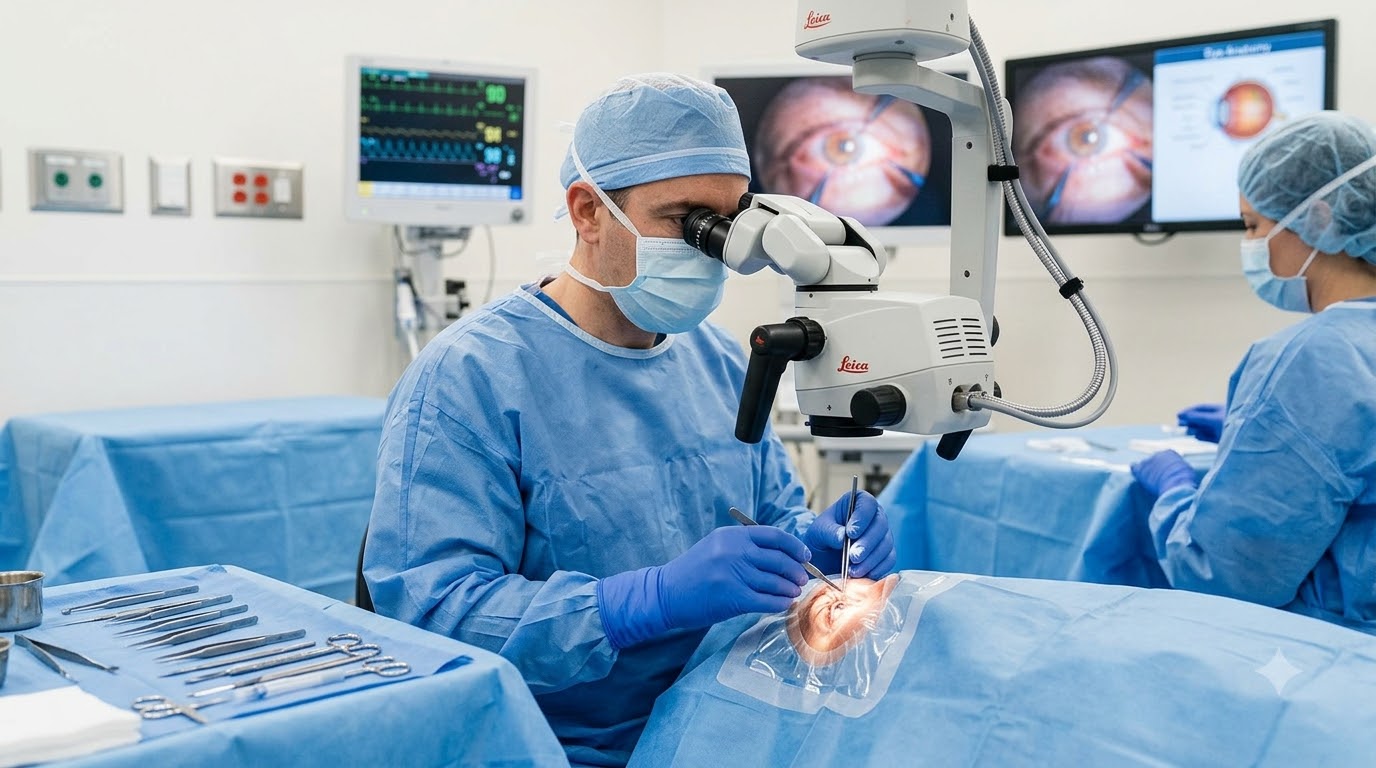
Glaucoma Surgery Treatment by Brit Indo Medical Concierge
- Glaucoma surgery treatment is used to lower pressure inside the eye and help protect the optic nerve from further damage.
- Glaucoma is a group of eye conditions that can cause progressive vision loss. In many cases, treatment focuses on controlling intraocular pressure (IOP).
- Treatment may include prescription eye drops, laser treatment or glaucoma surgery, depending on the type and severity of glaucoma.
- Surgery does not usually restore vision that has already been lost. Its main purpose is to reduce the risk of further damage and preserve remaining vision.
- Brit Indo Medical Concierge assists international patients, including patients from the UK, Europe and Canada, with planned medical treatment coordination in India.
- Support can include glaucoma specialist consultation, hospital appointment coordination, medical visa assistance, accommodation and international travel itinerary planning.
- The diagnosis, choice of treatment, surgery and medical follow-up are provided by qualified ophthalmologists and hospitals.
What Is Glaucoma?
- Glaucoma damages the optic nerve, which carries visual information from the eye to the brain.
- Increased eye pressure is an important risk factor, although glaucoma can sometimes damage the optic nerve even when measured eye pressure is not particularly high.
- Common forms include:
- Primary open-angle glaucoma
- Angle-closure glaucoma
- Secondary glaucoma
- Congenital or childhood glaucoma
- Glaucoma can progress gradually and may not cause noticeable symptoms in its early stages.
- Regular eye pressure testing, optic nerve examination and visual field testing can help monitor the condition.
- Once glaucoma has caused permanent optic-nerve damage, treatment generally aims to prevent or slow additional damage rather than reverse existing vision loss.
Who May Need Glaucoma Surgery?
- Patients whose eye pressure remains above the target level despite appropriate treatment.
- Patients who cannot tolerate or regularly use glaucoma eye drops.
- Patients whose glaucoma continues to progress despite medication or laser treatment.
- Patients with moderate or advanced glaucoma who require a significant reduction in IOP.
- Patients with certain types of angle-closure glaucoma where laser or surgical treatment is recommended.
- Patients who have previously undergone treatment but require additional pressure control.
- Some patients with cataracts and glaucoma may be considered for combined cataract and glaucoma surgery.
- The decision depends on the type of glaucoma, optic-nerve damage, target IOP, previous treatment and overall eye health.
Types of Glaucoma Surgery
Trabeculectomy
- Trabeculectomy surgery is a traditional glaucoma filtration procedure.
- The surgeon creates a controlled drainage pathway so aqueous fluid can leave the eye more effectively.
- The additional drainage can lower intraocular pressure.
- It may be recommended when medicines and/or laser treatment are not providing adequate pressure control.
- Trabeculectomy can provide substantial IOP reduction but requires careful postoperative monitoring.
- Apollo Hospitals currently lists an approximate Indian cost of ₹30,000–₹1,00,000 for trabeculectomy.
Glaucoma Drainage Implant or Tube Surgery
- Glaucoma drainage implant surgery uses a small tube and plate to help drain aqueous fluid.
- It may be considered for selected patients with difficult-to-control glaucoma or where other surgical approaches may have a higher risk of failure.
- Examples include Ahmed glaucoma valve and Baerveldt glaucoma implant procedures.
- The choice depends on the patient’s glaucoma type, previous surgery and target eye pressure.
Minimally Invasive Glaucoma Surgery
- MIGS, or minimally invasive glaucoma surgery, includes several procedures designed to improve aqueous fluid drainage using small surgical approaches.
- MIGS procedures may include trabecular bypass devices, goniotomy and trabeculotomy.
- MIGS is generally considered for selected patients, particularly those with mild-to-moderate glaucoma.
- More advanced glaucoma requiring very low target IOP may still require traditional filtration surgery or drainage implants.
Laser Glaucoma Treatment
- Selective Laser Trabeculoplasty (SLT) can improve aqueous drainage through the eye’s natural drainage pathway in suitable patients.
- Laser peripheral iridotomy (LPI) is commonly used for selected angle-closure mechanisms.
- Other laser procedures, including cyclophotocoagulation, may be used in particular clinical situations.
- Laser treatment is different from conventional glaucoma surgery and may sometimes be performed as an outpatient procedure.
- Current Indian published pricing lists SLT/ALT around ₹15,000–₹35,000 and LPI around ₹5,000–₹20,000, depending on the facility.
Approximate Glaucoma Surgery Cost – India vs UK vs USA
Costs vary significantly because glaucoma surgery includes several different procedures.
| Treatment / Country | Approximate Private/Self-Pay Cost |
|---|---|
| India – Trabeculectomy | ₹30,000–₹80,000+ |
| India – MIGS | ₹50,000–₹1,20,000+ |
| UK – Glaucoma Surgery | £3,000–£8,000+ |
| USA – Trabeculectomy | US$5,000–$15,000+ |
- Yashoda Hospitals publishes Indian ranges of approximately ₹20,000–₹60,000 for trabeculectomy, ₹30,000–₹70,000 for trabeculectomy with Mitomycin-C and ₹50,000–₹1,20,000 for MIGS.
- A UK private healthcare pricing source currently lists glaucoma surgery at approximately £5,530–£7,633, although individual procedures and inclusions vary.
- Another current private-market guide places UK private trabeculectomy at approximately £3,000–£7,500 per eye.
- US published estimates vary considerably. Current sources report approximately US$5,000–$15,000 per eye for trabeculectomy, while other US cost databases show lower procedure-specific averages depending on billing arrangements.
- These are approximate planning prices, not fixed quotations.
- The final cost can depend on the surgeon, hospital, procedure, implant, anaesthesia, diagnostic tests, medicines and postoperative care.
- International patients should request an itemised treatment quotation before travelling.
Why Consider Glaucoma Treatment in India?
- India has specialist ophthalmology hospitals and glaucoma clinics.
- Patients may have access to glaucoma specialists, laser treatment, filtration surgery, drainage implants and MIGS, depending on the hospital.
- Multiple treatment approaches allow the ophthalmologist to select a procedure according to the patient’s clinical condition.
- Published private treatment costs may be lower than some private healthcare prices in the UK and USA, although individual quotations vary.
- Diagnostic facilities such as OCT, visual field testing, gonioscopy and eye-pressure measurement may be available.
- International patients can coordinate planned consultations, surgery, accommodation and travel through a medical concierge service.
- Treatment should be selected according to clinical suitability, ophthalmologist experience, hospital facilities, postoperative care and total treatment requirements, not price alone.
Before Glaucoma Surgery
- The patient undergoes a detailed glaucoma eye examination.
- The ophthalmologist checks:
- Intraocular pressure
- Optic-nerve appearance
- Visual fields
- Drainage angle
- Corneal thickness where clinically required
- Retinal and optic-nerve imaging
- OCT glaucoma scans may be used to assess the optic nerve and retinal nerve fibre layer.
- Gonioscopy may be performed to determine whether the drainage angle is open or closed.
- The doctor reviews previous glaucoma treatments and current eye drops.
- Previous eye operations and medical conditions should be disclosed.
- Patients should provide a complete list of medicines and allergies.
- If taking blood-thinning medicines, patients should discuss this with the ophthalmologist rather than stopping medication independently.
- The surgeon explains the proposed procedure, expected recovery, possible complications and need for follow-up.
- International patients should carry previous glaucoma reports, OCT scans, visual-field reports and prescriptions.
- Brit Indo Medical Concierge can assist with specialist consultation coordination, hospital appointments, medical visa assistance, accommodation and travel planning.
During Glaucoma Surgery
- The exact procedure depends on the patient’s glaucoma type and treatment plan.
- Trabeculectomy creates a new drainage pathway for aqueous fluid.
- Tube surgery places a drainage device to divert aqueous fluid and reduce IOP.
- MIGS uses specialised small-incision techniques to improve fluid drainage.
- Laser procedures use controlled laser energy to improve drainage or reduce aqueous production depending on the treatment.
- Glaucoma surgery may be performed using local or general anaesthesia, depending on the procedure and patient.
- A trabeculectomy can take up to approximately one hour, although surgical time varies.
- The surgeon checks eye pressure and the surgical site before the patient leaves the operating or recovery area.
After Glaucoma Surgery and Recovery
- Postoperative recovery is an important part of glaucoma surgery treatment.
- Patients are usually prescribed antibiotic, steroid or other glaucoma-related eye drops according to the surgeon’s instructions.
- Frequent follow-up appointments may be required, particularly after trabeculectomy.
- The ophthalmologist monitors:
- Eye pressure
- Surgical drainage
- Inflammation
- Wound healing
- Vision
- Possible complications
- Some patients may need adjustment of sutures or additional treatment after filtration surgery.
- Patients should avoid rubbing or pressing the operated eye.
- Heavy lifting and strenuous exercise should be avoided until the surgeon provides clearance.
- Water, swimming and other activities may be restricted temporarily.
- Recovery varies considerably according to the type of glaucoma operation.
- Glaucoma surgery generally aims to protect remaining vision rather than improve vision already lost.
- Long-term glaucoma monitoring remains important even when surgery successfully lowers eye pressure.
Benefits and Possible Risks of Glaucoma Surgery
Potential Benefits
- Reduction of intraocular pressure.
- Reduced risk of further glaucoma-related optic-nerve damage when the target pressure is achieved.
- Potential reduction in dependence on glaucoma eye drops for selected patients.
- MIGS may provide an option for suitable patients with mild-to-moderate disease.
- Traditional filtration surgery can provide substantial pressure reduction when clinically indicated.
Possible Risks
- Bleeding.
- Infection.
- Inflammation.
- Eye pressure becoming temporarily too high or too low.
- Scarring that reduces the effectiveness of a filtration procedure.
- Cataract development or progression in some patients.
- Need for additional laser treatment, injections or further surgery.
- Vision can occasionally worsen following complications.
- Tube procedures can have implant-related complications.
- MIGS generally has a favourable safety profile, but it may not lower pressure sufficiently in advanced glaucoma.
How Brit Indo Medical Concierge Supports International Patients
- Brit Indo Medical Concierge assists international patients considering planned glaucoma treatment in India.
- Patients can share existing glaucoma reports, OCT scans, visual-field results and prescriptions.
- Assistance can include coordination of an ophthalmologist consultation.
- Hospital appointment scheduling can be arranged according to the treatment plan.
- Support can include medical visa assistance.
- International flight itinerary and accommodation can be coordinated.
- Treatment-related communication with the selected healthcare provider can be supported.
- Follow-up and return-travel planning can be coordinated according to medical advice.
- Brit Indo Medical Concierge does not replace the treating ophthalmologist or emergency eye-care service.
5 Frequently Asked Questions About Glaucoma Surgery
How much does glaucoma surgery cost in India?
- The glaucoma surgery cost in India depends on the procedure.
- Published ranges include approximately ₹20,000–₹60,000 for trabeculectomy, ₹50,000–₹1,20,000 for MIGS and up to ₹2,00,000+ for selected complex glaucoma implants.
- A personalised quotation is required after the patient’s eye examination.
Can glaucoma surgery restore lost vision?
- Glaucoma causes damage to the optic nerve that is generally permanent.
- Glaucoma surgery primarily aims to lower eye pressure and protect the remaining vision, rather than restore vision already lost.
Is glaucoma surgery better than eye drops?
- There is no single treatment that is appropriate for every glaucoma patient.
- Eye drops, laser treatment and surgery are used according to disease severity, target IOP, previous treatment and individual circumstances.
- Surgery may be considered when medication and/or laser treatment does not adequately control the disease.
How long does recovery take after glaucoma surgery?
- Recovery varies according to whether the patient has MIGS, trabeculectomy, tube surgery or laser treatment.
- Traditional filtration surgery generally requires closer and longer postoperative monitoring than many MIGS procedures.
- The surgeon provides individual instructions regarding work, exercise, driving and travel.
Can international patients travel to India for glaucoma surgery?
- Planned glaucoma surgery may be arranged for international patients after appropriate specialist assessment.
- Because glaucoma requires postoperative monitoring, patients should plan sufficient time in India for follow-up appointments before returning home.
- Brit Indo Medical Concierge can assist with consultation, hospital, visa, accommodation and travel coordination.
- Patients experiencing sudden vision loss, severe eye pain, a red eye with nausea/vomiting or other acute eye symptoms should seek urgent local eye care rather than delaying treatment for international travel.
Important Medical Disclaimer
- This article is intended for general glaucoma treatment and medical tourism information and should not replace advice from a qualified ophthalmologist.
- Glaucoma is a complex condition, and the appropriate treatment depends on the type and severity of disease.
- Glaucoma surgery cost figures are approximate and can change according to the procedure, hospital, surgeon, implant, diagnostic tests, medicines and postoperative care.
- Patients should obtain an individual medical assessment and written quotation before travelling.
- Glaucoma surgery cannot guarantee prevention of future vision loss, and lifelong monitoring may still be required.
- Diagnosis, surgery, medicines and clinical care are provided by qualified healthcare professionals and hospitals; Brit Indo Medical Concierge provides coordination support.
- Glaucoma Surgery Treatment India
- Glaucoma Surgery India
- Glaucoma Treatment India
- Glaucoma Surgery Cost India
- Glaucoma Surgery Cost UK
- Glaucoma Surgery Cost USA
- Glaucoma Treatment for International Patients
- Glaucoma Specialist India
- Glaucoma Eye Surgery India
- Trabeculectomy Surgery India
- Trabeculectomy Cost India
- Glaucoma Drainage Implant India
- Tube Shunt Surgery India
- Ahmed Glaucoma Valve Surgery
- Baerveldt Glaucoma Implant
- MIGS Glaucoma Surgery India
- Minimally Invasive Glaucoma Surgery
- Laser Glaucoma Treatment India
- Selective Laser Trabeculoplasty
- SLT Glaucoma Treatment
- Laser Peripheral Iridotomy
- Intraocular Pressure Treatment
- Glaucoma Eye Pressure Surgery
- Glaucoma Medical Tourism India
- Eye Surgery for International Patients
- Ophthalmology Treatment India
- International Patient Treatment India
- Brit Indo Medical Concierge
Reviews
There are no reviews yet.