
Hernia Surgery Treatment by Brit Indo Medical Concierge
- Hernia surgery is a common surgical treatment used to repair a weakness or opening in the abdominal wall through which tissue or part of the intestine can bulge.
- A hernia may appear as a visible lump or swelling in the abdomen, groin or another area of the abdominal wall.
- Some hernias cause little or no discomfort, while others can cause pain, heaviness, swelling or difficulty with daily activities.
- In some situations, a hernia can become trapped or strangulated, affecting the blood supply to the trapped tissue and requiring urgent surgery.
- Brit Indo Medical Concierge helps international patients from the UK, Europe, Canada and other countries coordinate medical treatment in India.
- Support can include hospital and doctor coordination, appointment assistance, medical visa assistance, travel itinerary, accommodation and treatment-related coordination.
- Diagnosis, surgery, anaesthesia, medicines and clinical care are provided by qualified doctors and hospitals.
What Is Hernia Surgery?
- Hernia repair surgery is performed to return the protruding tissue to its appropriate position and strengthen the weakened area of the abdominal wall.
- Depending on the type and location of the hernia, the surgeon may use surgical mesh or stitches to reinforce the weakened area.
- The two main approaches are open hernia repair and laparoscopic hernia repair, also known as keyhole surgery.
- The appropriate procedure depends on the type of hernia, size and location, previous surgery, general health and surgeon’s assessment.
- Many uncomplicated hernia repairs can be performed as day-case procedures, although some patients may require overnight or longer hospitalisation.
Who May Need Hernia Surgery?
- Patients with a hernia causing persistent pain or discomfort.
- Patients whose hernia is increasing in size.
- Patients experiencing difficulty with walking, exercise, work or normal daily activities because of the hernia.
- Patients with an inguinal hernia that is causing symptoms.
- Patients with a femoral hernia, which can have a higher risk of complications.
- Patients with an umbilical hernia causing symptoms or complications.
- Patients with an incisional hernia developing at or near a previous surgical incision.
- Patients with a hernia that becomes difficult or impossible to push back inside.
- Patients with a strangulated hernia or suspected bowel obstruction require urgent medical assessment and potentially emergency surgery.
Common Hernia Symptoms
- A visible bulge or lump in the groin, abdomen or belly button.
- Pain or discomfort at the site of the hernia.
- A feeling of pressure, heaviness or pulling.
- Pain that may increase when coughing, lifting or straining.
- Discomfort during physical activity.
- Some hernias may be painless and discovered during a routine examination.
- A painful, hard or non-reducible lump accompanied by vomiting or severe abdominal pain may indicate a complication requiring urgent medical attention.
Types of Hernia
Inguinal Hernia
- An inguinal hernia develops in the groin and is one of the most common types of hernia.
- It occurs when tissue or part of the bowel pushes through a weak area in the groin.
- Symptoms can include a groin lump, discomfort and pain, particularly with coughing, lifting or physical activity.
- Treatment may involve open inguinal hernia repair or laparoscopic inguinal hernia repair.
Femoral Hernia
- A femoral hernia develops near the upper thigh or groin.
- It is less common than an inguinal hernia.
- Femoral hernias may have a greater risk of becoming trapped or strangulated, so surgical assessment is important.
Umbilical Hernia
- An umbilical hernia develops around the belly button.
- It may appear as a small swelling that becomes more noticeable when coughing or straining.
- Surgery may be recommended when it causes symptoms, becomes larger or presents a complication.
Incisional Hernia
- An incisional hernia can develop at the site of a previous abdominal operation.
- It occurs when the abdominal wall remains weak around a previous surgical incision.
- Depending on its size and location, treatment can involve open or laparoscopic incisional hernia repair.
Hiatal Hernia
- A hiatal hernia occurs when part of the stomach moves through the diaphragm into the chest.
- It can be associated with symptoms such as acid reflux and heartburn.
- Treatment depends on symptoms and severity and may involve medication, lifestyle management or surgery in selected cases.
Types of Hernia Surgery
Open Hernia Repair
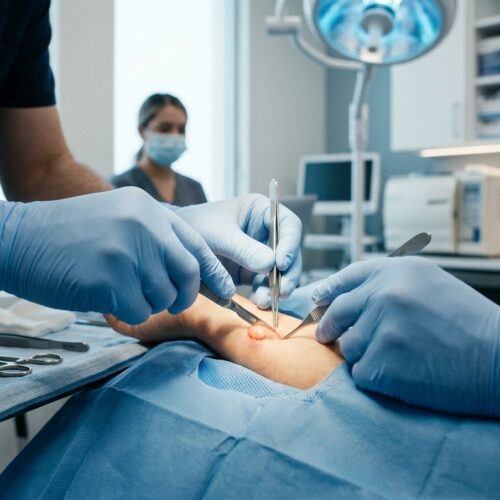
- Open hernia surgery uses an incision directly over or near the hernia.
- The surgeon returns the protruding tissue to its appropriate position.
- The weakened abdominal wall is then repaired, often using mesh reinforcement.
- Open repair may be suitable for many different hernia types.
- Depending on the situation, local, regional or general anaesthesia may be used.
Laparoscopic Hernia Repair
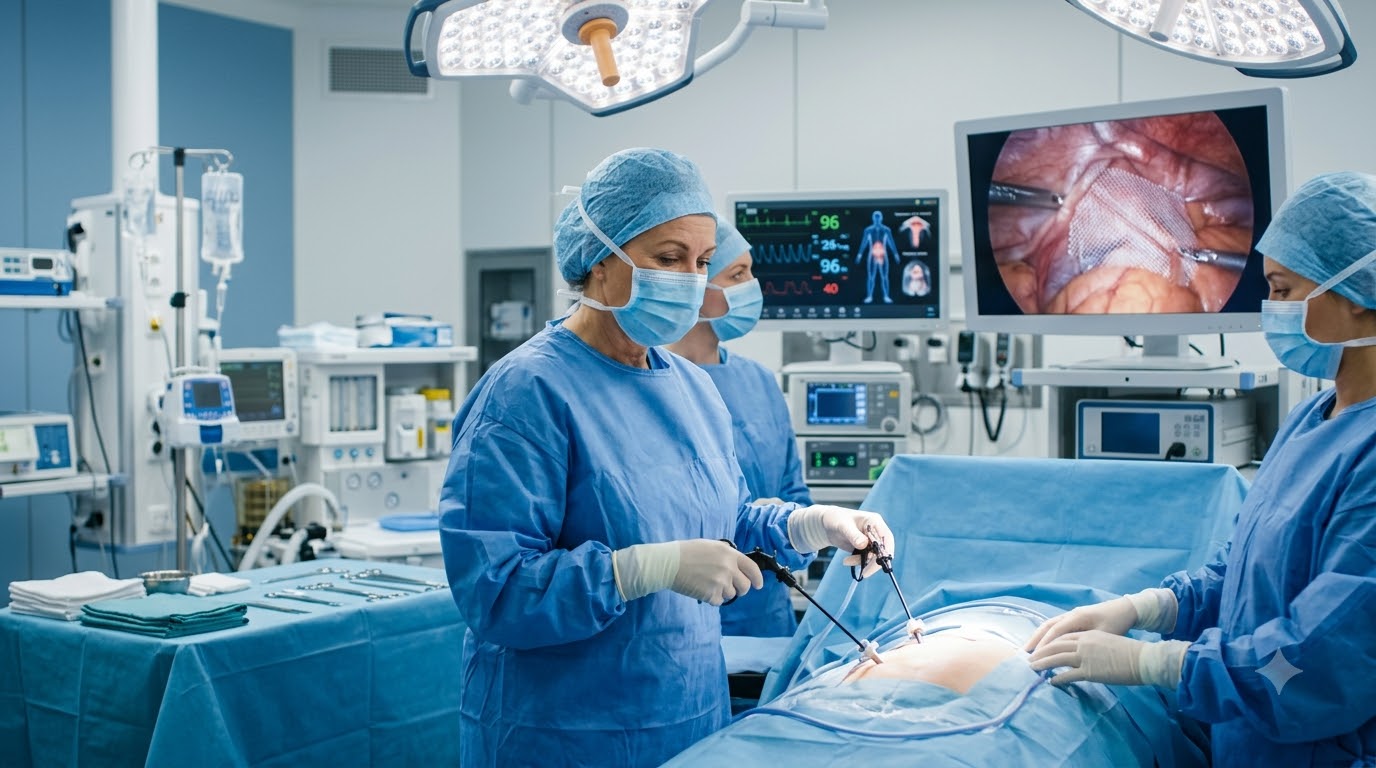
- Laparoscopic hernia repair is also called keyhole hernia surgery.
- The surgeon makes several small abdominal incisions.
- A laparoscope with a camera is inserted so the surgeon can view the hernia.
- Special instruments are used to return the hernia and reinforce the weakened area, commonly with mesh.
- Keyhole surgery may offer smaller incisions, although it is not suitable for every patient.
Approximate Hernia Surgery Cost – India vs UK vs USA
The hernia surgery cost depends on the type of hernia, open or laparoscopic technique, hospital, surgeon, mesh used, anaesthesia, investigations, room category and length of stay.
| Country | Approximate private/self-pay guide |
|---|---|
| India | ₹50,000–₹1,50,000+ for many laparoscopic inguinal repairs |
| UK – Private | Approximately £3,000–£6,000+, depending on hospital and package |
| USA – Self-pay | Approximately US$5,000–US$15,000+ for many outpatient repairs |
- Apollo Hospitals currently lists an average ₹50,000–₹1,50,000 range for laparoscopic inguinal hernia repair in India.
- UK private pricing can vary considerably because consultant, hospital and anaesthesia charges may be separate. PHIN currently shows individual private consultant fees for inguinal hernia repair ranging from several hundred pounds to several thousand pounds depending on provider, while anaesthesia and other hospital costs may be additional.
- In the USA, MDsave currently lists hernia repair prices from approximately US$4,762 to US$23,445, with a listed MDsave national average of approximately US$9,316 for laparoscopic hernia repair.
- These figures are approximate and should not be treated as a fixed quotation.
- Complicated hernias, emergency surgery, inpatient treatment and additional procedures can significantly increase the final cost.
- Patients should obtain a detailed quotation showing what is included, such as surgeon fee, hospital fee, anaesthesia, mesh, investigations, medicines and follow-up.
Why International Patients Consider Hernia Treatment in India
- India has hospitals providing general surgery and minimally invasive surgery.
- Private hospitals in major Indian cities offer facilities for international patients.
- Laparoscopic hernia surgery in India is available for appropriate patients.
- Treatment costs can be lower than many private healthcare prices in the UK and USA, although individual costs vary.
- Patients may have access to general surgeons, laparoscopic surgeons and gastrointestinal surgeons, depending on the hospital.
- Diagnostic facilities such as ultrasound and CT imaging may be available when clinically required.
- International patients can coordinate consultations, treatment and accommodation through a medical concierge service.
- Patients should consider surgeon qualifications, hospital facilities, treatment plan, emergency support, follow-up and total cost—not cost alone.
Before Hernia Surgery
- The patient first undergoes a consultation with a general surgeon or hernia specialist.
- The surgeon examines the hernia and reviews symptoms and medical history.
- In many cases, a hernia can be diagnosed through physical examination.
- Ultrasound, CT or other imaging may be recommended when the diagnosis is unclear or when a more complex hernia is suspected.
- The surgeon reviews previous abdominal operations and existing medical conditions.
- Patients should provide a complete list of medicines and allergies.
- Blood-thinning medicines may require special instructions before surgery.
- Patients receive instructions regarding fasting before hernia surgery.
- Smoking, alcohol consumption and other factors may be discussed as part of surgical preparation.
- International patients should carry previous medical reports, scans and medication information when travelling.
- Brit Indo Medical Concierge can help coordinate doctor appointments, hospital communication, medical visa assistance, accommodation and travel planning.
During Hernia Surgery
- Hernia repair surgery is performed using the technique selected by the surgeon.
- Anaesthesia is provided according to the procedure and patient’s medical needs.
- During open surgery, an incision is made over or near the hernia.
- The protruding tissue is returned to the abdominal cavity when appropriate.
- The weak area is repaired using stitches, mesh or a combination according to the surgical plan.
- During laparoscopic surgery, several small incisions are made.
- A camera and specialised instruments are used to repair the hernia from inside the abdomen.
- Mesh is commonly used to reinforce the weakened area in many repairs.
- NHS guidance indicates that an inguinal hernia operation commonly takes around 30–90 minutes, although the duration depends on the individual case.
After Hernia Surgery and Recovery
- After surgery, the patient is monitored until sufficiently recovered from anaesthesia.
- Many uncomplicated hernia repairs can be completed as day-case surgery, allowing the patient to return home the same day.
- Mild pain, swelling or bruising around the surgical area can occur.
- Some patients experience temporary bloating or shoulder discomfort after laparoscopic surgery because of the gas used during the procedure.
- Patients should keep the surgical wound clean and follow the hospital’s wound-care instructions.
- Gentle walking is generally encouraged as recovery progresses.
- Heavy lifting and strenuous exercise should be avoided until the surgeon confirms that it is safe.
- NHS guidance indicates that recovery from inguinal hernia repair can take around 4–6 weeks, although patients can often return to lighter activities earlier.
- People with physically demanding jobs may require more time away from work.
- Follow-up may be arranged depending on the procedure and individual recovery.
Benefits and Possible Risks of Hernia Surgery
Potential Benefits
- Treatment of a symptomatic abdominal or groin hernia.
- Reduction of hernia-related discomfort.
- Repair of the weakened abdominal wall.
- Prevention of certain serious complications associated with trapped or strangulated hernias.
- Improved ability to perform normal activities after recovery.
- Laparoscopic surgery can provide smaller incisions in appropriate patients.
Possible Risks
As with any surgery, hernia repair has potential risks.
- Infection.
- Bleeding.
- Blood clots.
- Difficulty passing urine.
- Temporary swelling or bruising.
- Persistent or chronic pain in some patients.
- Injury to nearby tissues or organs.
- Recurrence of the hernia.
- Complications related to anaesthesia.
- Mesh-related complications can occur in procedures where mesh is used.
- The risk profile varies according to the type of hernia, surgical technique and individual health.
How Brit Indo Medical Concierge Supports International Patients
- Brit Indo Medical Concierge works as a medical tourism consultant and coordinator for patients considering treatment in India.
- Patients can share their available medical reports and treatment requirements.
- Assistance can include hospital and doctor consultation coordination.
- Support may include medical visa assistance and flight itinerary planning.
- Accommodation arrangements can be coordinated according to the patient’s treatment schedule.
- The team can help coordinate communication between the international patient and selected healthcare providers.
- After treatment, assistance can be provided with return travel coordination.
- Brit Indo does not replace the treating surgeon, hospital or emergency medical service.
- The final decision regarding hernia surgery treatment is made by the qualified medical team after assessment.
5 Frequently Asked Questions About Hernia Surgery
How much does hernia surgery cost in India?
- The approximate cost of laparoscopic inguinal hernia repair in India can be around ₹50,000–₹1,50,000, according to current Apollo Hospitals information.
- The final price can change according to the hospital, surgeon, mesh, investigations, room category and medical complexity.
Is laparoscopic hernia surgery better than open surgery?
- Both open hernia repair and laparoscopic hernia repair are established surgical approaches.
- Keyhole surgery uses smaller incisions, while open surgery uses a larger incision directly over or near the hernia.
- The appropriate method depends on the type and location of the hernia, previous surgery, overall health and the surgeon’s assessment.
How long does it take to recover from hernia surgery?
- Recovery varies between patients and procedures.
- NHS guidance indicates that recovery after inguinal hernia repair can take approximately 4–6 weeks, although light activities can often resume sooner.
- Heavy lifting should be avoided until the treating surgeon gives clearance.
Can a hernia be treated without surgery?
- Some hernias, particularly those causing few or no symptoms, may be managed with observation depending on the type and individual circumstances.
- Surgery may be recommended when a hernia causes symptoms, grows, interferes with daily activities or presents a complication.
- A painful, hard or trapped hernia requires prompt medical assessment.
Can international patients travel to India for hernia surgery?
- Patients with a stable, planned hernia operation may be able to arrange treatment in India after appropriate medical assessment.
- However, severe pain, vomiting, a hard or non-reducible swelling, abdominal distension or other signs of obstruction or strangulation require urgent medical assessment and should not be delayed for international travel.
- Brit Indo Medical Concierge can assist with the coordination process for suitable planned international cases.
Important Medical Disclaimer
- This information is intended for general education and medical tourism planning.
- It should not replace an examination or advice from a qualified surgeon.
- Hernia surgery, including laparoscopic and open repair, must be planned according to the patient’s individual condition.
- Prices shown are approximate and may change because of hospital, surgeon, procedure type, exchange rates and additional treatment requirements.
- Patients experiencing severe or rapidly increasing pain, vomiting, abdominal swelling, fever or a painful hernia that cannot be pushed back should seek urgent medical attention.
- Brit Indo Medical Concierge provides coordination and medical tourism support; diagnosis, surgery, anaesthesia, medicines and clinical care remain the responsibility of qualified healthcare professionals and hospitals.
- Hernia Surgery Treatment India
- Hernia Surgery Cost India
- Hernia Repair India
- Laparoscopic Hernia Surgery India
- Laparoscopic Hernia Repair
- Inguinal Hernia Surgery India
- Inguinal Hernia Repair Cost
- Umbilical Hernia Surgery India
- Incisional Hernia Repair India
- Femoral Hernia Surgery
- Hiatal Hernia Treatment India
- Open Hernia Repair
- Keyhole Hernia Surgery
- Hernia Mesh Surgery
- Hernia Surgery Cost UK
- Hernia Surgery Cost USA
- Hernia Treatment for International Patients
- General Surgery India
- Medical Tourism India
- International Patient Treatment India
- Brit Indo Medical Concierge
Reviews
There are no reviews yet.