
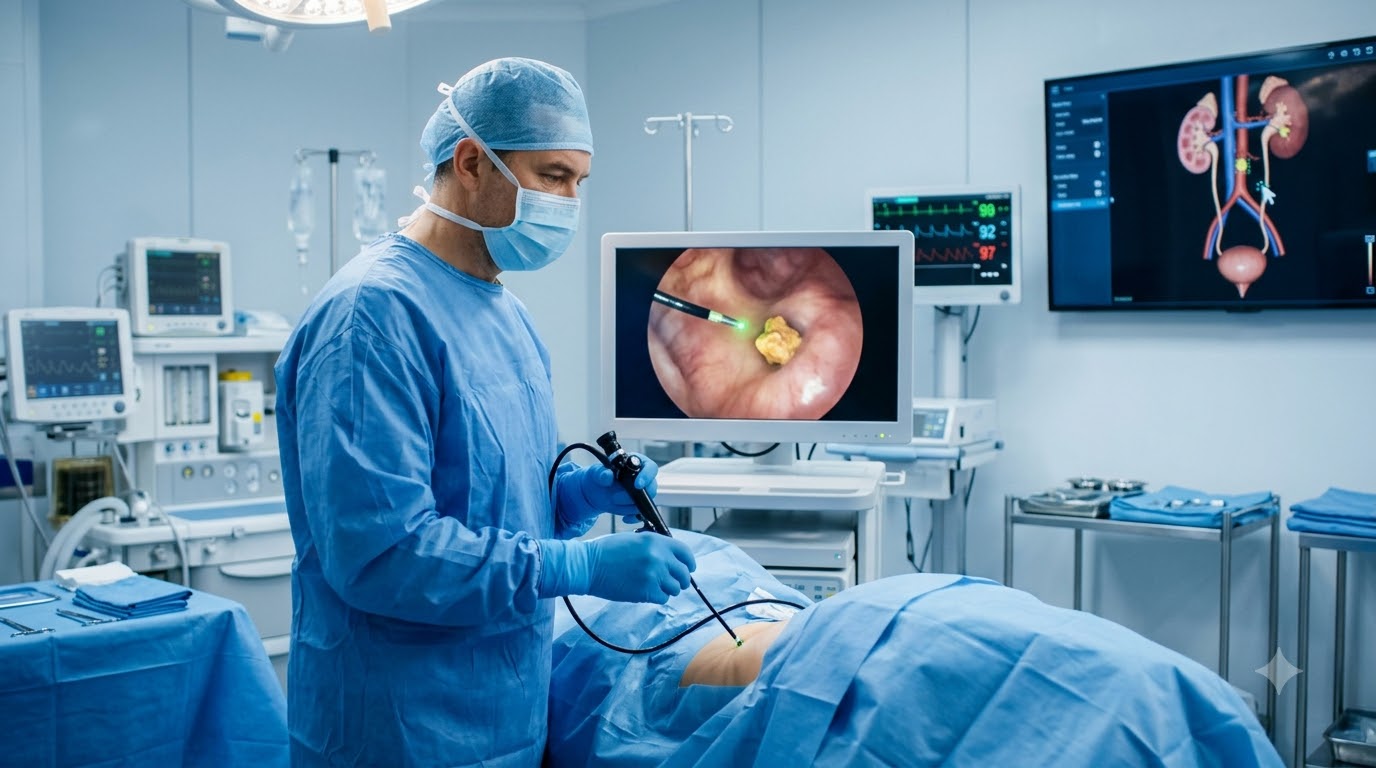
Kidney Stone Removal Surgery Treatment by Brit Indo Medical Concierge
- Kidney stone removal surgery is used to remove or break kidney or urinary-tract stones when they are unlikely to pass naturally or are causing pain, obstruction, infection or other complications.
- Kidney stones are hard deposits that can form when minerals and salts in urine become concentrated and crystallise.
- Small stones may sometimes pass naturally with fluids, pain management and medical supervision.
- Larger or difficult stones may require kidney stone surgery, particularly when there is persistent obstruction, severe symptoms, infection or reduced kidney function.
- Treatment depends on the size, number and location of the kidney stone, urinary anatomy and the patient’s overall health.
- Brit Indo Medical Concierge helps international patients coordinate kidney stone treatment in India, including specialist consultation, hospital appointments, treatment estimates, accommodation, travel and medical-visa assistance where applicable.
- The final procedure should always be selected by a qualified urologist after reviewing scans and medical history.
Who May Need Kidney Stone Removal Surgery?
- Patients with stones that are too large to pass naturally.
- People experiencing repeated or severe kidney stone pain.
- Patients with a stone causing urinary obstruction.
- People with recurrent blood in the urine associated with a diagnosed stone.
- Patients whose stone is causing repeated urinary problems.
- People with a kidney stone associated with infection or other complications.
- Patients whose stone has not passed despite appropriate observation or conservative treatment.
- People with multiple or complex kidney stones.
- Patients with stones located in areas where spontaneous passage is unlikely.
- People whose kidney stone is affecting kidney drainage or function.
- Patients with recurrent stones who require specialist evaluation and a longer-term prevention plan.
According to the NHS, treatment depends on the size and location of the stone. Small stones may pass without surgery, while larger stones or stones causing blockage or severe pain may require procedures such as shockwave lithotripsy, ureteroscopy or percutaneous nephrolithotomy.
Symptoms of Kidney Stones
- Sharp pain in the side or lower back.
- Pain that can move towards the abdomen or groin.
- Pain that comes and goes in waves.
- Blood in the urine.
- Nausea or vomiting.
- Pain or burning while urinating.
- Frequent or urgent urination.
- Difficulty passing urine in some cases.
- Fever or chills may indicate an associated infection and require urgent medical assessment.
- Severe pain accompanied by fever, chills, vomiting or difficulty passing urine should not be delayed for planned medical travel.
- Such symptoms can indicate obstruction or infection and require prompt medical evaluation.
Types of Kidney Stone Removal Surgery
Shockwave Lithotripsy – SWL
- Shockwave lithotripsy (SWL) uses focused shockwaves to break a kidney stone into smaller fragments.
- The smaller fragments can then pass through the urinary tract in the urine.
- SWL is generally non-invasive because instruments do not need to be inserted into the kidney.
- It may be suitable for selected stones depending on their size, location and composition.
- Some patients may require more than one treatment session.
- Temporary blood in the urine, bruising or discomfort can occur after treatment.
Ureteroscopy and Laser Lithotripsy
- Ureteroscopy involves passing a thin camera through the urinary tract to reach the stone.
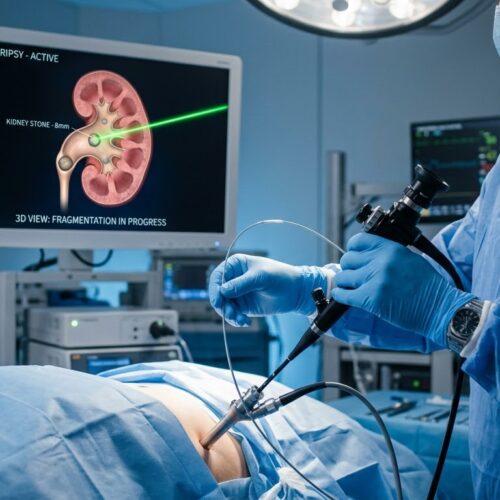
- A laser may be used to break the stone into smaller pieces.
- Small fragments can be removed using specialised instruments.
- Ureteroscopy can be used for stones in the ureter and kidney.
- A temporary ureteric stent may sometimes be placed to support urine drainage after the procedure.
- Ureteroscopy is commonly performed under anaesthesia.
Percutaneous Nephrolithotomy – PCNL
- PCNL kidney stone surgery is generally used for larger or more complex kidney stones.
- A small opening is made through the skin into the kidney.
- Special instruments are inserted directly into the kidney to break and remove the stones.
- PCNL can be particularly useful for large stone burdens, including some staghorn stones.
- Because it is more invasive than SWL, recovery and hospital observation may be longer.
Mini-PCNL
- Mini-PCNL uses a smaller access tract than conventional PCNL in selected cases.
- The technique may reduce tissue disruption while allowing removal of appropriately sized stones.
- Suitability depends on the stone characteristics and the urologist’s assessment.
Open or Laparoscopic Stone Surgery
- Traditional open surgery is now uncommon for most kidney stones.
- In selected complex cases, laparoscopic or robotic-assisted approaches may be considered.
- The urologist determines the appropriate approach based on anatomy, stone burden and previous procedures.
Kidney Stone Surgery Cost: India vs UK vs USA
Approximate private/self-pay planning ranges are:
| Treatment | India Approx. | UK Private Approx. | USA Approx. |
|---|---|---|---|
| SWL / Lithotripsy | ₹40,000–₹1,00,000+ | £2,000–£4,500+ | $5,000–$12,000+ |
| Ureteroscopy / Laser | ₹60,000–₹1,50,000+ | £3,000–£6,000+ | $8,000–$15,000+ |
| PCNL | ₹90,000–₹2,00,000+ | £5,000–£10,000+ | $15,000–$25,000+ |
- These are indicative private-treatment ranges, not fixed prices.
- The final kidney stone removal cost in India depends on stone size, number and location, procedure selected, hospital, surgeon, anaesthesia, diagnostic scans and hospital stay.
- Some published Indian healthcare pricing guides place kidney stone surgery in a broad range of approximately ₹40,000–₹1,50,000 or more, depending on the procedure and hospital.
- UK private prices vary considerably by provider and procedure.
- US costs can vary substantially because hospital, surgeon, anaesthesia, facility and insurance arrangements can all affect the final bill.
- NHS treatment in the UK is structured differently from private international-patient treatment, so NHS charges should not be directly compared with the private figures above.
What Can Increase the Cost?
- Larger or multiple stones.
- Difficult stone location.
- Bilateral kidney stones.
- Emergency treatment.
- Infection requiring additional treatment.
- CT scans and laboratory investigations.
- Anaesthesia.
- Ureteric stent placement or removal.
- Multiple procedures.
- Longer hospital stay.
- Follow-up imaging.
- Additional treatment for recurrent stones.
- International patients should request an itemised kidney stone surgery quotation before travelling.
Why Consider Kidney Stone Treatment in India?
- Kidney stone treatment in India can be comparatively affordable for international patients.
- Major Indian cities have hospitals with dedicated urology departments.
- Patients can access minimally invasive procedures such as laser kidney stone treatment, ureteroscopy and PCNL.
- Many hospitals use modern imaging and endoscopic equipment.
- International-patient departments may provide assistance with appointments and communication.
- English is widely used in Indian private healthcare.
- Patients can coordinate treatment, accommodation and travel through a medical concierge service.
- Cost should not be the only consideration; patients should also compare urologist experience, hospital standards, technology, aftercare and emergency support.
Before Kidney Stone Removal Surgery
Urology Consultation
Before treatment, the urologist may review:
- Medical history.
- Previous kidney stone episodes.
- Current symptoms.
- Previous stone procedures.
- Current medicines.
- Allergies.
- Kidney function.
- Urinary symptoms.
- Previous infections.
Diagnostic Tests
Depending on the case, the doctor may recommend:
- Urine testing.
- Blood tests.
- Kidney function tests.
- Ultrasound.
- X-ray.
- CT scan for kidney stones, particularly when detailed information about stone size and location is required.
- Stone analysis after removal where appropriate.
Preparing for International Treatment
International patients can:
- Share previous medical reports.
- Provide CT scans or ultrasound reports.
- Arrange an online urology consultation.
- Receive a preliminary treatment recommendation.
- Request an itemised treatment estimate.
- Confirm expected hospital stay.
- Ask about stent placement and removal.
- Arrange medical visa assistance, where applicable.
- Plan flights and accommodation.
- Arrange airport transfers and local transportation.
Brit Indo Medical Concierge can assist with these non-clinical arrangements.
During Kidney Stone Removal Surgery
During SWL
- The patient is positioned so that shockwaves can be directed towards the stone.
- Imaging is used to locate the stone.
- Controlled shockwaves are delivered to fragment the stone.
- The fragments are expected to pass naturally through urine.
- Pain relief or anaesthesia may be provided according to the treatment plan.
During Ureteroscopy
- The patient receives appropriate anaesthesia.
- A thin ureteroscope is passed through the urinary tract.
- The urologist identifies the stone.
- A laser may fragment the stone.
- Stone fragments may be removed using specialised instruments.
- A ureteric stent may be inserted when clinically required.
During PCNL
- The patient is given anaesthesia.
- A small access route is created into the kidney through the skin.
- A nephroscope is introduced into the kidney.
- Larger stones are broken into pieces.
- Stone fragments are removed.
- A temporary drainage tube or stent may be used depending on the case.
After Kidney Stone Surgery
Immediate Recovery
- Some discomfort or blood in the urine may occur after treatment.
- Patients should follow the urologist’s medication instructions.
- Adequate fluid intake may be recommended unless medically restricted.
- Patients should follow dietary and activity instructions.
- A temporary stent may cause urinary frequency, urgency or discomfort.
Returning to Normal Activities
- Recovery depends on the procedure.
- SWL recovery is generally shorter than recovery after PCNL.
- Ureteroscopy patients may return to normal activities relatively quickly, depending on the procedure and individual recovery.
- PCNL may require a longer recovery period.
- Heavy physical activity should be avoided until the urologist provides clearance.
- Follow-up imaging may be required to confirm that stones have been cleared.
Preventing Future Kidney Stones
- Drink sufficient fluids according to medical advice.
- Follow a personalised dietary plan when recommended.
- Maintain a healthy body weight.
- Complete any metabolic or urine evaluation recommended by the urologist.
- If a stone is analysed, dietary recommendations may be based on its composition.
- Attend follow-up appointments.
Benefits and Possible Risks
Potential Benefits
- Removal or fragmentation of problematic stones.
- Relief from obstruction and stone-related symptoms.
- Minimally invasive treatment options for many patients.
- Treatment of larger stones that are unlikely to pass naturally.
- Potential improvement in urinary drainage when obstruction is successfully treated.
Possible Risks
Depending on the procedure, risks may include:
- Bleeding.
- Infection.
- Pain or discomfort.
- Urinary tract injury.
- Residual stone fragments.
- Need for another procedure.
- Ureteric stent discomfort.
- Anaesthesia-related complications.
- Rare injury to surrounding structures.
The individual risks should be explained by the treating urologist before consent.
How Brit Indo Medical Concierge Helps International Patients
Brit Indo Medical Concierge can coordinate:
- Urologist consultation.
- Hospital appointment scheduling.
- Review and organisation of medical reports.
- Treatment estimate assistance.
- Kidney stone procedure coordination.
- Medical visa assistance, where applicable.
- International flight planning.
- Accommodation.
- Airport transfers.
- Local transportation.
- Follow-up appointment coordination.
- Return-travel planning.
Brit Indo Medical Concierge works as a medical tourism consultant and coordinator. Diagnosis, surgery, medicines and clinical care remain the responsibility of the selected qualified urologist and hospital.
Frequently Asked Questions About Kidney Stone Surgery
1. How much does kidney stone removal surgery cost in India?
- The kidney stone removal cost in India can vary from approximately ₹40,000 to ₹2,00,000+, depending on the procedure.
- SWL may be less expensive than PCNL, while complex or multiple stones can increase the overall cost.
- A personalised quotation should be obtained after reviewing the patient’s scans.
2. Which kidney stone removal procedure is best?
- There is no single procedure that is suitable for every patient.
- SWL, ureteroscopy and PCNL are selected according to stone size, location, number, anatomy and other clinical factors.
- The urologist should recommend the appropriate procedure after imaging and examination.
3. How long does kidney stone surgery take?
- Treatment time depends on the stone burden and procedure.
- A straightforward ureteroscopy or SWL session may be relatively short, while complex PCNL treatment can take longer.
- Hospital stay also varies by procedure and individual recovery.
4. Is laser treatment safe for kidney stones?
- Laser lithotripsy is an established technique used during ureteroscopy to fragment stones.
- As with every surgical procedure, there are potential risks, including infection, bleeding and urinary-tract injury.
- The urologist should explain the individual benefits and risks before treatment.
5. Can Brit Indo Medical Concierge arrange kidney stone treatment in India?
- Yes. Brit Indo Medical Concierge can help international patients coordinate urology consultation, hospital appointments, treatment estimates, medical visa assistance, flights, accommodation and local transportation.
- The treating hospital and urologist remain responsible for diagnosis, treatment and medical decisions.
Plan Kidney Stone Removal Surgery in India with Brit Indo Medical Concierge
- Kidney stone removal surgery in India offers international patients access to several treatment approaches, including SWL, ureteroscopy, laser lithotripsy and PCNL.
- The correct procedure depends on the individual patient’s stone characteristics and medical condition.
- Patients should provide recent scans and medical reports before travelling whenever possible.
- Compare the complete treatment package, including urologist fees, hospital charges, anaesthesia, investigations, medicines, stents, hospital stay and follow-up.
- Brit Indo Medical Concierge helps international patients coordinate their medical journey from specialist consultation and hospital treatment to accommodation and return travel.
Kidney Stone Removal Surgery India, Kidney Stone Treatment India, Kidney Stone Surgery Cost India, Kidney Stone Removal Cost India, Laser Kidney Stone Treatment India, Ureteroscopy India, PCNL Surgery India, Lithotripsy India, Kidney Stone Hospital India, Urology Treatment India, Medical Tourism India
kidney stone removal, renal stone treatment, urinary stone removal, ureter stone treatment, shockwave lithotripsy, SWL, laser lithotripsy, ureteroscopy, PCNL, percutaneous nephrolithotomy, kidney stone laser surgery, ureteric stent, kidney stone CT scan, kidney stone symptoms, kidney stone diagnosis, urologist consultation, minimally invasive urology, kidney stone recovery, kidney stone prevention, international patients, medical travel to India, medical visa assistance.
Prices are approximate and intended for general planning only. The final cost depends on the hospital, urologist, stone size and location, procedure selected, investigations, anaesthesia, medicines, hospital stay and follow-up requirements. A qualified urologist should provide the final diagnosis, treatment recommendation, risks and quotation.


Reviews
There are no reviews yet.