
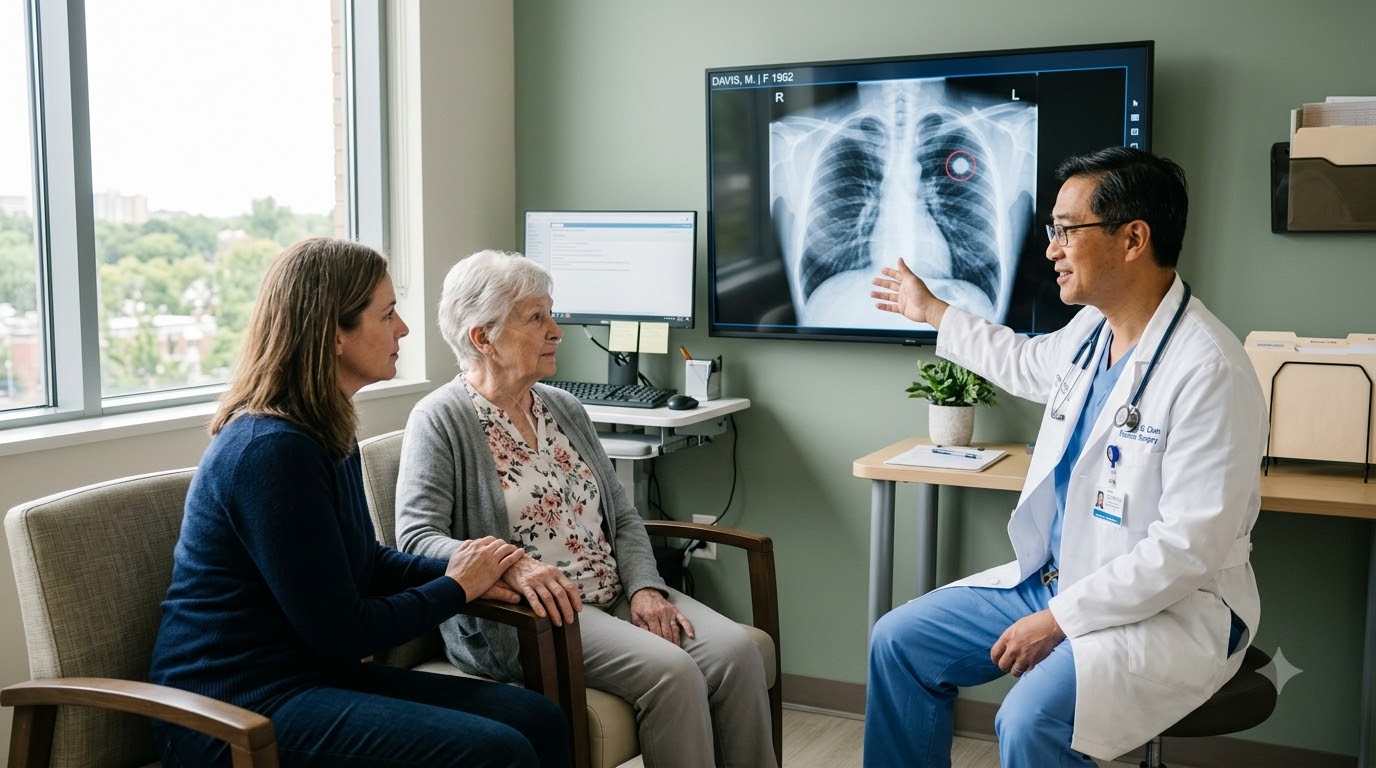
Lung Cancer Surgery Treatment by Brit Indo Medical Concierge
- Lung cancer surgery is a treatment used to remove cancerous tissue from the lung when the cancer can be safely treated with an operation.
- Surgery is particularly important for selected patients with early-stage non-small cell lung cancer (NSCLC), although some patients with more advanced disease may also be considered for surgery as part of combined treatment.
- The treatment plan depends on the type of lung cancer, stage, tumour location, lymph-node involvement, lung function and overall health.
- Lung cancer treatment may involve surgery alone or a combination of chemotherapy, radiation therapy, targeted therapy and immunotherapy.
- Brit Indo Medical Concierge helps international patients coordinate planned lung cancer treatment in India, including specialist consultation, hospital appointments, medical visa assistance, accommodation and travel planning.
- The treating cancer team makes the final medical decision after reviewing diagnostic scans, biopsy results, pulmonary function and the patient’s overall condition.
What Is Lung Cancer Surgery?
- Lung cancer surgery involves removing the tumour together with an appropriate amount of surrounding lung tissue.
- The goal is to remove the cancer completely when this is medically achievable.
- Surgery may also involve removal and examination of nearby lymph nodes to determine whether cancer has spread.
- The extent of surgery depends mainly on:
- Tumour size
- Tumour location
- Cancer stage
- Lymph-node involvement
- Lung function
- General health
- Non-small cell lung cancer is the type most commonly considered for surgical treatment.
- Small cell lung cancer (SCLC) is usually treated primarily with chemotherapy and/or radiation because it often spreads early, although surgery may be considered in very selected early cases.
- Before surgery, a multidisciplinary team may include a thoracic surgeon, medical oncologist, radiation oncologist, pulmonologist, radiologist and pathologist.
Who May Need Lung Cancer Surgery?
- Patients with early-stage non-small cell lung cancer where the tumour can be completely removed.
- Selected patients with locally advanced lung cancer following appropriate chemotherapy, immunotherapy or radiation treatment.
- Patients with a localised tumour and sufficient lung function to tolerate surgery.
- Selected patients with a solitary lung tumour where surgery offers a potential treatment benefit.
- Some patients with recurrent or limited metastatic disease may be assessed for surgery in highly selected circumstances.
- Surgery may not be suitable when:
- Cancer has spread extensively to distant organs.
- The tumour cannot be completely removed.
- Lung function is too poor to safely tolerate the planned operation.
- Other serious medical conditions make major surgery unsafe.
- A complete lung cancer staging assessment is required before deciding on surgery.
Types of Lung Cancer Surgery
Wedge Resection
- A wedge resection removes the tumour together with a small wedge-shaped portion of surrounding healthy lung tissue.
- It removes less lung tissue than a lobectomy.
- It may be considered for selected small tumours or patients who may not tolerate a larger operation.
- The surgeon also assesses nearby lymph nodes when appropriate.
Segmentectomy
- Segmentectomy removes an anatomical segment of a lung lobe rather than the entire lobe.
- It may be suitable for selected patients with smaller, localised lung cancers.
- It preserves more lung tissue than lobectomy.
- Suitability depends on tumour location, size and other clinical factors.
Lobectomy
- Lobectomy removes an entire lobe of the lung containing the cancer.
- It is a common surgical treatment for suitable patients with localised NSCLC.
- The surgeon may also remove nearby lymph nodes for staging.
- Depending on tumour location and patient suitability, lobectomy can sometimes be performed using minimally invasive techniques.
Pneumonectomy
- Pneumonectomy involves removing an entire lung.
- It may be required when the tumour is large or located in a position where a smaller resection cannot safely remove all cancer.
- Because removing an entire lung is a major operation, detailed assessment of heart and lung function is essential.
Sleeve Resection
- A sleeve resection removes a section of the main airway and affected lung tissue while preserving as much lung as possible.
- The remaining airway is reconstructed.
- It may be considered for selected tumours located close to major airways.
- This technique can sometimes avoid removing the entire lung.
Minimally Invasive Lung Cancer Surgery
- Selected patients may undergo VATS (video-assisted thoracoscopic surgery) or robotic-assisted thoracic surgery.
- These approaches use smaller incisions than traditional open surgery.
- Potential advantages can include smaller wounds and shorter recovery in appropriate patients.
- Not every tumour or patient is suitable for minimally invasive surgery.
Approximate Lung Cancer Surgery Cost – India vs UK vs USA
| Country | Approximate Private/Self-Pay Cost |
|---|---|
| India | ₹2,00,000–₹5,00,000+ |
| UK | £15,000–£30,000+ |
| USA | US$25,000–$60,000+ |
- These are approximate planning ranges, not fixed treatment quotations.
- The lung cancer surgery cost in India can vary according to the operation, hospital, surgeon, surgical technology and length of hospital stay.
- Lobectomy, pneumonectomy and complex airway or chest-wall procedures may have different costs.
- Minimally invasive or robotic surgery may have additional technology-related costs.
- The total cost may include:
- Surgeon fees
- Anaesthesia
- Operating-room charges
- ICU or high-dependency care if required
- Hospital room
- Diagnostic tests
- Pathology
- Medicines
- Follow-up appointments
- Chemotherapy, immunotherapy, targeted therapy and radiation therapy are generally additional costs unless specifically included in a treatment package.
- UK and USA private prices also vary significantly depending on the hospital, surgeon, insurance and complexity of treatment.
- International patients should request a written, itemised quotation before travelling.
Why Consider Lung Cancer Treatment in India?
- India has specialised cancer hospitals and thoracic surgery centres.
- Selected hospitals provide multidisciplinary lung cancer treatment.
- Patients may have access to thoracic surgeons, medical oncologists, radiation oncologists and pulmonologists.
- Treatment may include conventional open surgery as well as VATS and robotic-assisted thoracic surgery where clinically appropriate.
- International patients can coordinate their treatment through a medical concierge service.
- Patients should evaluate:
- Thoracic surgeon experience
- Cancer hospital facilities
- Intensive-care support
- Diagnostic imaging
- Pathology services
- Minimally invasive surgery availability
- Postoperative respiratory care
- Oncology follow-up
- Complete treatment cost
- Cost should be considered together with the proposed treatment plan and clinical expertise.
Before Lung Cancer Surgery
- A confirmed diagnosis is required before surgery.
- The medical team may review:
- CT chest scan
- PET-CT where appropriate
- MRI brain or other imaging when indicated
- Bronchoscopy
- Biopsy
- Histopathology
- Molecular or biomarker testing
- The cancer is staged to determine whether surgery is appropriate.
- Lymph nodes may be evaluated using imaging, bronchoscopy-based procedures or biopsy.
- Pulmonary function tests help determine whether the patient can safely tolerate removal of part or all of a lung.
- Cardiac assessment may also be required.
- The medical team reviews smoking history and may strongly advise smoking cessation before surgery.
- Patients should provide information about:
- Existing medical conditions
- Previous surgeries
- Medicines
- Allergies
- Smoking history
- Previous cancer treatment
- Some patients receive neoadjuvant chemotherapy, immunotherapy or combined treatment before surgery.
- International patients should bring all available biopsy reports, pathology records, CT/PET scans and previous treatment documents.
- Brit Indo Medical Concierge can assist with specialist appointment coordination and hospital scheduling before travel.
During Lung Cancer Surgery
- Lung cancer surgery is performed under general anaesthesia.
- The patient is closely monitored throughout the operation.
- The surgeon accesses the chest using either:
- Traditional open surgery
- VATS
- Robotic-assisted surgery
- The cancerous portion of the lung is removed according to the planned operation.
- Nearby lymph nodes may be removed and sent for pathological examination.
- The surgeon checks the remaining lung and surrounding structures before completing the operation.
- A chest drain is usually placed temporarily to remove air and fluid from the chest.
- The patient is transferred to a recovery area and may require intensive monitoring depending on the operation and health status.
After Lung Cancer Surgery and Recovery
- Recovery varies according to the type of operation and the patient’s general health.
- Patients may experience:
- Chest discomfort
- Fatigue
- Cough
- Shortness of breath
- Reduced appetite
- Temporary weakness
- Pain management is an important part of recovery.
- Breathing exercises and physiotherapy may be recommended.
- Early movement can help reduce complications such as blood clots and chest infections.
- The chest drain is removed when the surgical team considers it appropriate.
- Patients are gradually encouraged to increase walking and daily activity.
- Heavy lifting may need to be avoided for a period after surgery.
- Follow-up appointments are important for reviewing the final pathology report.
- The pathology report may provide information about:
- Cancer type
- Tumour size
- Surgical margins
- Lymph-node involvement
- Cancer stage
- Further treatment may be recommended based on the final results.
- This may include chemotherapy, radiation therapy, targeted therapy or immunotherapy.
- Regular follow-up is important for monitoring recovery and cancer status.
Possible Benefits and Risks of Lung Cancer Surgery
Potential Benefits
- Removal of a localised lung tumour.
- Potential for long-term disease control in selected patients.
- Provides tissue for detailed pathological staging.
- May be part of a curative treatment plan for selected early-stage cancers.
- Minimally invasive surgery may reduce wound size and support recovery in appropriate patients.
Possible Risks
- Bleeding
- Infection
- Air leakage from the lung
- Pneumonia
- Blood clots
- Heart or rhythm problems
- Breathing difficulties
- Persistent pain
- Prolonged air leak
- Need for additional treatment
- Complications related to anaesthesia
- Rarely, serious or life-threatening complications
- The individual risk depends on the patient’s age, lung function, cancer stage, operation and other medical conditions.
How Brit Indo Medical Concierge Supports International Patients
- Brit Indo Medical Concierge helps international patients coordinate planned lung cancer treatment in India.
- Services can include:
- Thoracic surgeon consultation coordination
- Hospital appointment scheduling
- Medical visa assistance
- Accommodation coordination
- International flight itinerary planning
- Treatment schedule coordination
- Post-treatment travel planning
- Patients can provide previous medical records for preliminary coordination.
- The treating cancer specialists remain responsible for diagnosis, surgery and medical treatment.
- Brit Indo provides medical tourism coordination and travel support, not independent medical diagnosis.
5 Frequently Asked Questions About Lung Cancer Surgery
How much does lung cancer surgery cost in India?
- The approximate lung cancer surgery cost in India can range from ₹2 lakh to ₹5 lakh or more.
- The final price depends on the type of surgery, hospital, surgeon, technology, ICU requirements, pathology and hospital stay.
- Chemotherapy, immunotherapy and radiation therapy are generally additional costs.
Is lung cancer surgery suitable for every patient?
- No.
- Surgery is most commonly considered when the cancer can be removed safely and the patient has adequate health and lung function.
- Cancer stage, lymph-node involvement and distant spread are important factors.
- A multidisciplinary cancer team determines whether surgery is appropriate.
What is the difference between lobectomy and pneumonectomy?
- A lobectomy removes one lobe of the lung.
- A pneumonectomy removes an entire lung.
- Lobectomy preserves more lung tissue and is commonly used when the tumour can be completely removed without taking the whole lung.
- The surgeon determines the appropriate operation based on tumour location and extent.
How long does recovery take after lung cancer surgery?
- Recovery varies depending on whether the patient undergoes wedge resection, segmentectomy, lobectomy, pneumonectomy or another procedure.
- Minimally invasive surgery may allow faster recovery for selected patients.
- Major surgery can require several weeks before patients return to their usual activities.
- The surgeon provides individual guidance about driving, exercise, work and travel.
Can international patients travel to India for lung cancer surgery?
- International patients can arrange planned lung cancer surgery in India following specialist assessment.
- Patients should allow enough time for consultation, surgery, hospital recovery and postoperative review.
- Brit Indo Medical Concierge can assist with specialist consultation, hospital coordination, medical visa assistance, accommodation and international travel planning.
- Patients with severe breathing difficulty, coughing blood, chest pain or rapidly worsening symptoms should seek urgent local medical care rather than delaying treatment for international travel.
Important Medical Disclaimer
- This content provides general information about lung cancer surgery treatment and does not replace advice from a qualified thoracic surgeon, oncologist or multidisciplinary cancer team.
- Not every lung cancer patient is suitable for surgery.
- Lung cancer surgery prices are approximate and can vary according to cancer stage, surgical technique, hospital, surgeon, investigations, ICU care and postoperative treatment.
- Treatment outcomes cannot be guaranteed.
- Patients should obtain a personalised medical assessment and written treatment quotation before travelling to India.
- Lung Cancer Surgery Treatment India
- Lung Cancer Surgery India
- Lung Cancer Treatment in India
- Lung Cancer Surgery Cost India
- Lung Cancer Surgery Cost UK
- Lung Cancer Surgery Cost USA
- Lung Cancer Hospital India
- Lung Cancer Specialist India
- Thoracic Surgeon India
- Surgical Oncologist India
- Lung Cancer Treatment for International Patients
- Lung Cancer Medical Tourism India
- Non-Small Cell Lung Cancer Surgery
- NSCLC Surgery India
- Small Cell Lung Cancer Treatment
- Lobectomy Surgery India
- Pneumonectomy India
- Wedge Resection Lung Surgery
- Segmentectomy Lung Surgery
- Sleeve Resection Lung Surgery
- VATS Lung Cancer Surgery
- Robotic Lung Cancer Surgery
- Minimally Invasive Lung Surgery
- Lung Cancer Lymph Node Surgery
- Lung Cancer Surgery Recovery
- Early Stage Lung Cancer Surgery
- Lung Tumour Removal Surgery
- Cancer Treatment India for UK Patients
- International Patient Cancer Treatment India
- Brit Indo Medical Concierge

Reviews
There are no reviews yet.