
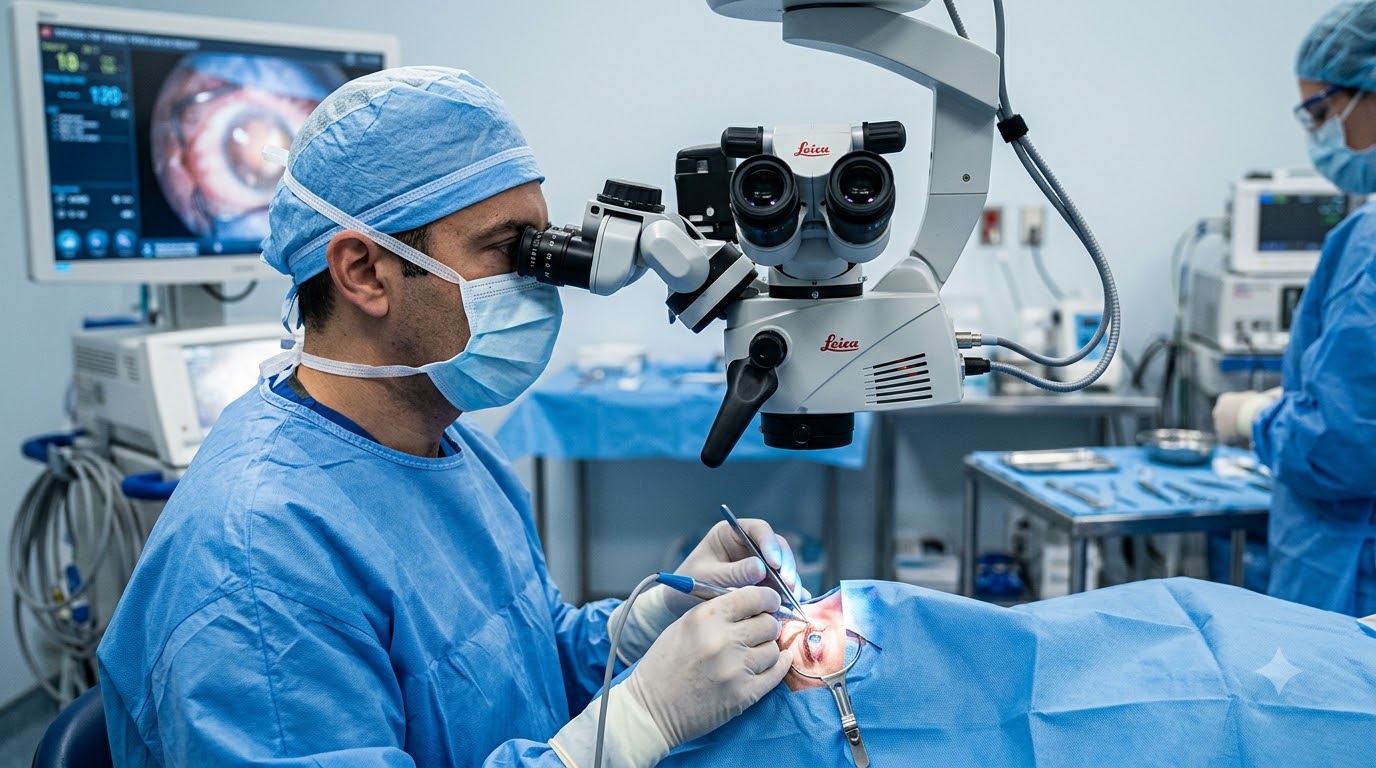
Cataract Eye Surgery Treatment by Brit Indo Medical Concierge
- Cataract Eye surgery is an eye operation that removes the cloudy natural lens of the eye and replaces it with a clear artificial intraocular lens (IOL).
- A cataract can cause blurred vision, glare, difficulty seeing at night, faded colours and reduced vision, which may affect reading, driving, work and everyday activities.
- Cataracts are commonly associated with ageing, although they can also occur because of diabetes, eye injury, certain medicines or other eye conditions.
- Cataract Eye surgery in India is available through specialist eye hospitals and ophthalmology centres offering different surgical techniques and IOL options.
- Brit Indo Medical Concierge helps international patients, including patients from the UK, Europe and Canada, coordinate planned medical treatment in India.
- Support can include ophthalmologist consultation coordination, hospital appointments, medical visa assistance, international travel itinerary and accommodation coordination.
- The diagnosis, surgical procedure, lens selection and medical care are provided by qualified ophthalmologists and hospitals.
- Cataract surgery is generally elective in adults, but the decision should be based on how cataracts affect vision, daily activities and quality of life.
What Is a Cataract?
- A cataract develops when the natural lens inside the eye becomes cloudy.
- The cloudy lens prevents light from passing clearly to the retina.
- Common symptoms can include:
- Blurred or cloudy vision
- Difficulty reading small print
- Increased sensitivity to bright lights
- Glare around headlights
- Difficulty seeing at night
- Faded or yellow-looking colours
- Frequent changes in glasses prescription
- Reduced ability to drive or perform normal activities
- Cataracts can affect one or both eyes.
- When both eyes require surgery, the operations are commonly performed on separate days, although some centres may offer bilateral surgery for selected patients.
Who May Need Cataract Eye Surgery?
- People whose cataract is affecting everyday vision.
- Patients having difficulty reading, watching television or recognizing faces.
- People experiencing difficulty driving, particularly at night.
- Patients who experience significant glare or halos around lights.
- People whose vision affects work, hobbies or independence.
- Patients whose cataract makes it difficult for doctors to examine or treat the back of the eye.
- Adults with cataracts who and their ophthalmologist decide that surgery is appropriate.
- Children with cataracts may also require surgery, but treatment decisions are different and should be made by a specialist paediatric ophthalmology team.
- Surgery is not necessarily required immediately after a cataract is diagnosed. The timing depends on the patient’s symptoms and quality of life.
Types of Cataract Surgery
Phacoemulsification Cataract Eye Surgery
- Phacoemulsification is one of the most commonly used cataract surgery techniques.
- A small incision is made in the eye.
- Ultrasound energy breaks the cloudy lens into smaller pieces.
- The lens material is removed using suction.
- A new intraocular lens implant is positioned inside the eye.
- The small incision often heals without stitches.
- Apollo Hospitals describes phacoemulsification as a minimally invasive technique with a relatively quick recovery for many patients.
Small Incision Cataract Surgery
- Small Incision Cataract Surgery (SICS) uses a small surgical incision to remove the cloudy lens.
- It can be useful in selected patients, including some with advanced or dense cataracts.
- It may have different cost and equipment requirements compared with phacoemulsification.
- The surgeon selects the technique based on the patient’s eye condition and clinical requirements.
Laser-Assisted Cataract Surgery
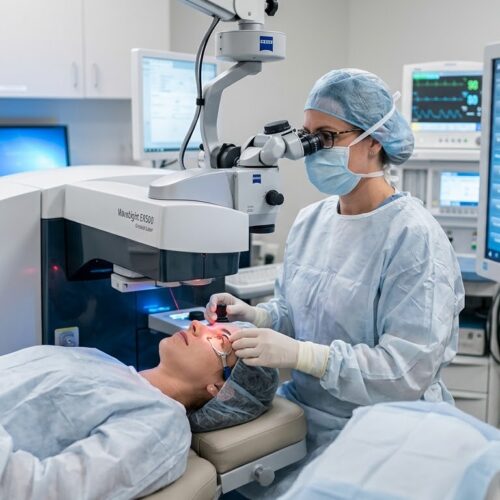
- Femtosecond laser-assisted cataract surgery uses a specialised laser for selected stages of the operation.
- Cataract removal is then completed using the appropriate surgical technique.
- Laser assistance is not automatically required for every cataract patient.
- Evidence and specialist guidance indicate that conventional and laser-assisted approaches can both be used safely when appropriately selected.
Types of Intraocular Lens Used in Cataract Surgery
Monofocal IOL
- A monofocal lens provides a fixed focus, commonly for distance vision.
- Patients may still require glasses for reading or other close-up activities.
- Monofocal lenses are commonly included in standard cataract surgery packages.
Toric IOL
- Toric lenses are designed to correct astigmatism.
- They may reduce dependence on glasses for distance vision in suitable patients.
- The ophthalmologist determines whether a toric IOL is appropriate after eye measurements.
Multifocal or Trifocal IOL
- Multifocal and trifocal lenses are designed to provide vision at more than one distance.
- They may reduce dependence on glasses for selected activities.
- They are not suitable for everyone.
- Patients should discuss possible benefits, limitations and visual effects with their ophthalmologist before choosing a premium lens.
Extended Depth of Focus IOL
- EDOF lenses are designed to provide an extended range of functional vision.
- They may be considered for selected patients depending on eye health, lifestyle and visual requirements.
- Premium IOLs usually involve an additional cost.
Approximate Cataract Surgery Cost – India vs UK vs USA
| Country | Approximate Private/Self-Pay Cost |
|---|---|
| India | ₹25,000–₹1,00,000+ per eye |
| UK | £2,000–£4,000+ per eye |
| USA | US$3,280–US$6,999+ per eye |
- Current Indian pricing varies by city, hospital, surgical technique and lens. Practo currently reports cataract surgery costs of approximately ₹18,000–₹1,20,000 nationally, while Apollo Hospitals gives approximately ₹30,000–₹1,00,000 for phacoemulsification.
- In Mumbai, Practo currently lists approximately ₹17,600–₹55,000, with an average around ₹29,618.
- For private cataract treatment in the UK, Practice Plus currently lists cataract surgery from £2,099 per eye, while its published guidance gives a broader UK private average of approximately £3,000–£4,000 per eye.
- Moorfields Private currently lists £3,095 per eye for a standard cataract package, excluding the initial £325 consultation and certain additional options or tests.
- In the USA, MDsave currently lists cataract removal surgery at approximately US$3,280–US$6,999, compared with its estimated national average of US$8,825.
- These figures are approximate price guides rather than fixed treatment quotations.
- Premium IOLs, additional investigations, anaesthesia, complex cataracts and other medical requirements can increase the total cost.
- Patients should request an itemised quotation before confirming treatment.
Why Consider Cataract Surgery in India?
- India has specialist eye hospitals and ophthalmology centres offering cataract treatment.
- Patients can access different IOL options and cataract surgery techniques depending on clinical suitability.
- Published private-treatment prices can vary significantly by hospital and city.
- International patients can coordinate consultations and treatment through a medical concierge service.
- Diagnostic facilities are available for pre-operative eye assessment.
- Patients should consider ophthalmologist qualifications, hospital facilities, IOL quality, follow-up care and total treatment cost when selecting treatment.
- Price should not be the only consideration when choosing cataract treatment.
Before Cataract Surgery
- The patient undergoes a comprehensive cataract eye examination.
- The ophthalmologist checks visual acuity and examines the eye.
- Eye measurements and biometry are performed to help select the appropriate IOL power.
- The doctor assesses the cornea, retina, optic nerve and other eye structures where required.
- Existing conditions such as glaucoma, diabetic eye disease or macular problems may affect expected visual outcomes.
- The patient’s medical history and current medicines are reviewed.
- Contact lens users may be advised to stop wearing lenses for a specified period before measurements or surgery.
- The ophthalmologist explains:
- Recommended surgical technique
- IOL choices
- Expected visual outcome
- Possible need for glasses
- Potential risks
- Recovery requirements
- International patients should bring previous eye reports, prescriptions, scans and medical records.
- Brit Indo Medical Concierge can help coordinate the specialist consultation, hospital appointment, medical visa assistance, accommodation and travel planning.
During Cataract Surgery
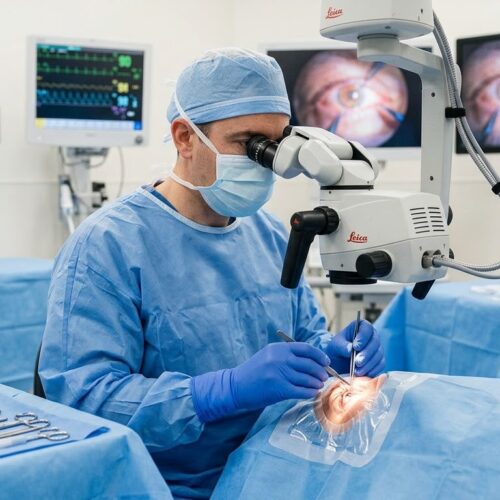
- Most adult cataract operations are performed under local or topical anaesthesia.
- The patient remains awake but the eye is numbed so the procedure should not be painful.
- Eye drops are used to dilate the pupil.
- The eye and surrounding area are cleaned and prepared.
- A small incision is made at the front of the eye.
- During standard phacoemulsification, ultrasound energy breaks up the cloudy lens.
- The cloudy lens material is removed.
- The selected intraocular lens implant is placed inside the eye.
- The small incision often does not require stitches.
- The operation commonly takes around 20–45 minutes, although the actual time varies between patients and procedures.
- Most patients can leave the hospital or eye centre on the same day after appropriate observation.
After Cataract Surgery and Recovery
- The patient receives prescribed antibiotic and anti-inflammatory eye drops or other medicines as instructed.
- Temporary blurred vision can occur immediately after surgery.
- Mild soreness, watering, sensitivity to light or a gritty sensation can occur during early recovery.
- Vision often begins improving within days, although complete healing can take several weeks.
- Avoid rubbing or pressing the operated eye.
- Use the protective eye shield if instructed.
- Avoid swimming and strenuous activities until the ophthalmologist confirms they are safe.
- Do not drive until vision meets the applicable legal and medical requirements.
- Attend all scheduled post-operative eye examinations.
- A new glasses prescription may be required after the eye has healed.
- Full recovery can take approximately 4–6 weeks for some patients, although functional vision may improve much sooner.
Benefits and Possible Risks of Cataract Surgery
Potential Benefits
- Improved clarity of vision.
- Better ability to read and perform daily activities.
- Reduced cataract-related glare.
- Improved colour perception.
- Better vision for driving where appropriate.
- Potential reduction in dependence on glasses depending on the IOL selected.
- Removal of the cloudy natural lens is considered permanent; however, posterior capsule opacification (PCO) can develop later and may be treated with YAG laser capsulotomy.
Possible Risks
- Infection.
- Bleeding or inflammation.
- Increased eye pressure.
- Retinal problems.
- Corneal swelling or clouding.
- Problems with the position of the IOL.
- Persistent or reduced vision.
- Rarely, additional surgery may be required.
- Serious complications are uncommon, but patients should discuss their individual risk with the ophthalmologist.
How Brit Indo Medical Concierge Supports International Patients
- Brit Indo Medical Concierge provides medical tourism coordination for international patients seeking planned treatment in India.
- Patients can share their previous eye reports and treatment requirements.
- Assistance can include ophthalmologist consultation coordination.
- Hospital appointments can be coordinated according to the patient’s treatment schedule.
- Support can include medical visa assistance.
- International flight itinerary and accommodation can be coordinated.
- Treatment-related communication with the selected healthcare provider can be supported.
- Follow-up and return-travel arrangements can be coordinated according to the treating doctor’s advice.
- Brit Indo Medical Concierge does not replace the ophthalmologist or emergency medical services.
- The final decision about cataract surgery treatment is made by the qualified eye-care team following examination.
5 Frequently Asked Questions About Cataract Surgery
How much does cataract surgery cost in India?
- Cataract surgery cost in India can vary from approximately ₹25,000 to ₹1,00,000+ per eye depending on the hospital, city, surgical technique and IOL.
- Practo currently reports a wider national range of approximately ₹18,000–₹1,20,000.
- Premium lenses and complex cases can increase the final price.
Is cataract surgery painful?
- Cataract surgery is generally performed using local or topical anaesthesia, so the eye is numbed during the procedure.
- Patients may experience mild discomfort, grittiness or soreness after surgery.
- The ophthalmologist will provide appropriate aftercare and medication instructions.
How long does cataract surgery take?
- The operation itself commonly takes approximately 20–45 minutes, although preparation and recovery time at the hospital will make the overall visit longer.
- Most patients can return home on the same day after medical assessment.
How long does it take to recover from cataract surgery?
- Vision can begin improving within a few days.
- Some patients continue to experience mild blurring or irritation during early recovery.
- Complete healing may take approximately 4–6 weeks, depending on the individual.
Can cataracts come back after surgery?
- The removed cataract itself does not grow back.
- However, the capsule behind the artificial lens can become cloudy, a condition called posterior capsule opacification.
- If clinically necessary, this can usually be treated with a YAG laser capsulotomy.
Important Medical Disclaimer
- This content is intended for general cataract treatment and medical tourism information and should not replace advice from a qualified ophthalmologist.
- Every patient’s eye condition is different, and not everyone is suitable for every cataract surgery technique or IOL.
- Cataract surgery costs are approximate and can change according to the hospital, surgeon, IOL type, diagnostic tests, anaesthesia and medical complexity.
- Patients should obtain a personalised medical assessment and written quotation before travelling.
- Sudden loss of vision, severe eye pain, flashes, a sudden increase in floaters or a dark curtain/shadow across vision requires urgent eye-care assessment rather than waiting for planned medical travel.
- Cataract Surgery Treatment India
- Cataract Surgery India
- Cataract Surgery Cost India
- Cataract Operation India
- Cataract Treatment India
- Cataract Surgery for International Patients
- Cataract Surgery Cost UK
- Cataract Surgery Cost USA
- Cataract Surgery Price India
- Phacoemulsification Cataract Surgery
- Phaco Cataract Surgery India
- Laser Cataract Surgery India
- Laser-Assisted Cataract Surgery
- Intraocular Lens Implant
- IOL Lens for Cataract Surgery
- Monofocal IOL
- Toric IOL
- Multifocal IOL
- Trifocal IOL
- Premium Cataract Lens
- Cataract Eye Surgery
- Cataract Specialist India
- Eye Hospital India
- Ophthalmologist India
- Medical Tourism India
- Eye Treatment in India for Foreign Patients
- International Patient Eye Treatment
- Brit Indo Medical Concierge

Reviews
There are no reviews yet.