
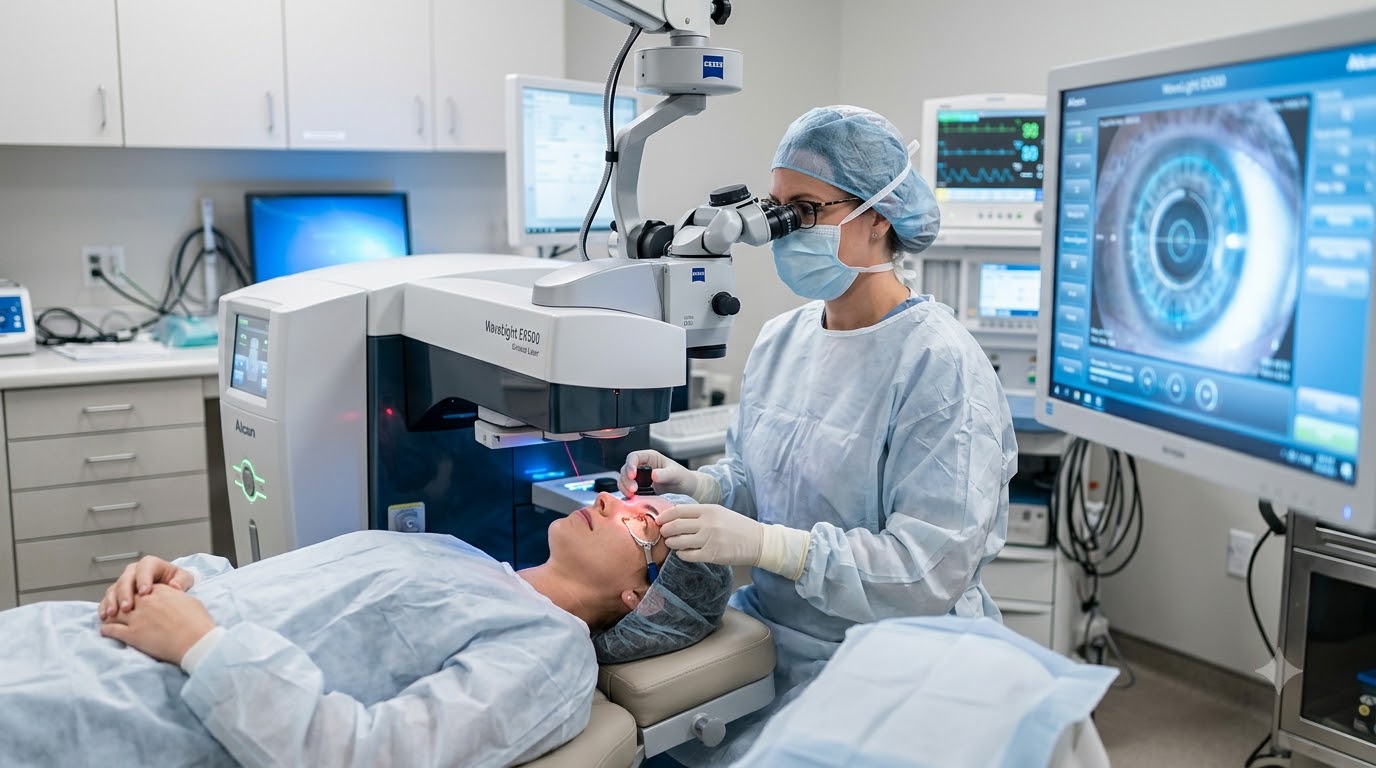
Laser Eye Surgery Treatment by Brit Indo Medical Concierge
- Laser eye surgery is a group of procedures used to correct certain refractive errors, including short-sightedness (myopia), long-sightedness (hyperopia) and astigmatism.
- The aim is to change the shape of the cornea so that light focuses more accurately on the retina.
- Common procedures include LASIK, Femto-LASIK, PRK, TransPRK and SMILE.
- Laser vision correction can reduce dependence on spectacles or contact lenses for appropriately selected patients.
- It is not suitable for everyone, and a detailed laser eye surgery consultation and eye examination is essential before treatment.
- Brit Indo Medical Concierge helps international patients, including patients from the UK, Europe and Canada, coordinate planned eye treatment in India.
- Support can include ophthalmologist consultation coordination, hospital appointments, medical visa assistance, accommodation and international travel itinerary planning.
- The treating ophthalmologist makes the final decision about suitability, procedure selection and postoperative care.
What Is Laser Eye Surgery?
- Laser eye surgery reshapes the cornea using controlled laser technology.
- The cornea is the transparent front surface of the eye and plays an important role in focusing light.
- Refractive errors occur when the shape of the eye prevents light from focusing correctly on the retina.
- Laser vision correction can change the corneal curvature to improve focusing.
- Depending on the patient’s prescription and corneal characteristics, the surgeon may recommend:
- LASIK
- Femto-LASIK
- PRK
- TransPRK
- SMILE
- The objective is usually to reduce dependence on glasses and contact lenses, rather than to guarantee perfect unaided vision.
- Some patients may still require glasses for specific activities after treatment.
Who May Need Laser Eye Surgery?
- Adults who are dependent on glasses or contact lenses because of a stable refractive prescription.
- Patients with myopia, commonly known as short-sightedness.
- Patients with hyperopia, commonly called long-sightedness.
- Patients with astigmatism caused by an irregular corneal curvature.
- People who find contact lenses uncomfortable or inconvenient.
- People whose lifestyle, work or sports activities make glasses or contact lenses difficult to use.
- Patients who have a stable prescription and meet the surgeon’s eye-health requirements.
- Suitable patients must have sufficient corneal thickness and healthy eyes for the proposed procedure.
- Laser surgery may not be appropriate for patients with certain corneal diseases, uncontrolled dry eye, unstable prescriptions or other eye conditions.
- Age, pregnancy, certain medical conditions and medications can also affect suitability.
- A specialist laser eye surgery assessment is required before a final decision.
Types of Laser Eye Surgery
LASIK Eye Surgery
- LASIK eye surgery is one of the most widely recognised forms of laser vision correction.
- The surgeon creates a thin corneal flap.
- An excimer laser reshapes the underlying corneal tissue according to the patient’s prescription.
- The flap is then repositioned.
- LASIK can correct many cases of myopia, hyperopia and astigmatism.
- Vision often improves quickly after suitable LASIK treatment, although recovery differs between patients.
Femto-LASIK
- Femto-LASIK uses a femtosecond laser to create the corneal flap rather than a mechanical blade.
- An excimer laser then reshapes the cornea.
- It provides a highly computer-controlled approach to flap creation.
- The suitability of Femto-LASIK depends on corneal measurements and overall eye health.
PRK
- PRK (Photorefractive Keratectomy) is a surface laser procedure.
- Unlike LASIK, PRK does not create a conventional corneal flap.
- The surface layer of the cornea is removed or moved aside before laser reshaping.
- A protective contact lens may be placed during the early healing period.
- Visual recovery is generally slower than LASIK, although PRK can be suitable for some patients who are not ideal LASIK candidates.
TransPRK
- TransPRK is a surface laser technique in which the laser removes the surface epithelial layer before correcting the corneal shape.
- It avoids the creation of a LASIK-style flap.
- It may be considered for selected patients after corneal assessment.
- Recovery can still take longer than conventional LASIK.
SMILE Eye Surgery
- SMILE (Small Incision Lenticule Extraction) uses a femtosecond laser to create and remove a small piece of corneal tissue called a lenticule.
- It is performed through a small incision rather than creating a large LASIK flap.
- SMILE is primarily used for suitable patients with myopia and certain levels of astigmatism.
- The surgeon determines whether SMILE is appropriate based on prescription, corneal measurements and other clinical factors.
Approximate Laser Eye Surgery Cost – India vs UK vs USA
| Country | Approximate Private/Self-Pay Cost |
|---|---|
| India | ₹30,000–₹1,50,000 per eye |
| UK | £1,500–£3,500 per eye |
| USA | US$1,500–$4,500 per eye |
- Laser eye surgery cost in India varies according to the procedure, technology, surgeon, hospital and patient’s prescription.
- Published Indian private-care estimates commonly place LASIK in the range of approximately ₹30,000–₹1,50,000 for both eyes, although premium technology can cost more. (apollohospitals.com)
- Some Indian providers quote prices on a per-eye basis, while others publish packages for both eyes, so patients should check exactly what the quotation includes.
- In the UK, private laser eye surgery cost varies by provider, prescription and procedure. Moorfields Private publishes laser vision correction pricing from approximately £2,500, while other UK private providers publish different package prices. (moorfields.nhs.uk)
- In the USA, published private LASIK pricing commonly varies from around US$2,000 to US$4,500 per eye, depending on technology, provider and prescription. (aao.org)
- These are approximate planning ranges, not fixed quotations.
- The final price may include or exclude:
- Initial consultation
- Corneal mapping
- Diagnostic tests
- Surgeon fees
- Laser facility fees
- Medicines
- Follow-up appointments
- Enhancement procedures
- International patients should request a written, itemised treatment quotation before travelling.
Why Consider Laser Eye Surgery in India?
- India has specialised eye hospitals and refractive surgery centres.
- Patients may have access to different laser platforms and treatment techniques.
- LASIK, Femto-LASIK, PRK and SMILE are available at selected specialist centres.
- International patients can coordinate consultation and treatment through a medical concierge service.
- Published treatment prices may differ substantially between hospitals and cities.
- Patients can compare the complete treatment package rather than looking only at the headline procedure price.
- Important factors include:
- Ophthalmologist qualifications
- Laser technology
- Corneal diagnostic equipment
- Postoperative care
- Follow-up arrangements
- Total treatment cost
- Patients should select treatment based on medical suitability and quality of care rather than cost alone.
Before Laser Eye Surgery
- A comprehensive laser eye surgery assessment is performed before treatment.
- The ophthalmologist checks the patient’s:
- Current glasses/contact lens prescription
- Visual acuity
- Corneal shape
- Corneal thickness
- Tear-film and dry-eye status
- Eye pressure
- General eye health
- Corneal topography or tomography may be performed to identify irregular corneal shapes and help determine suitability.
- The prescription should generally be stable before refractive surgery.
- Contact lens wear may need to be stopped for a period before measurements and surgery because contact lenses can temporarily alter corneal shape.
- The doctor reviews medical history, previous eye surgery and medications.
- Patients should disclose:
- Previous eye problems
- Dry-eye symptoms
- Autoimmune conditions
- Diabetes or other relevant medical conditions
- Current medicines
- Pregnancy or breastfeeding where applicable
- The surgeon explains the proposed technique, expected recovery, possible side effects and alternatives.
- International patients should carry their eye test reports, prescription history and previous medical records.
During Laser Eye Surgery
- Laser vision correction is generally performed as an outpatient procedure.
- The eye is numbed with anaesthetic eye drops.
- The patient remains awake during the procedure.
- An instrument may be used to keep the eyelids open.
- The exact steps depend on the chosen procedure.
- With LASIK, a corneal flap is created, the excimer laser reshapes the cornea and the flap is repositioned.
- With PRK, the corneal surface is treated and the underlying cornea is reshaped using an excimer laser.
- With SMILE, a femtosecond laser creates a corneal lenticule that is removed through a small incision.
- The laser treatment itself is usually very short, although the total time at the clinic is longer because of preparation and postoperative checks.
- Most patients return home the same day after the surgeon confirms that they are ready to leave.
After Laser Eye Surgery and Recovery
- Use prescribed antibiotic, anti-inflammatory or lubricating eye drops exactly as directed.
- Temporary blurred vision, watering, light sensitivity, irritation or a gritty sensation can occur.
- Dry eyes are a common temporary side effect after laser vision correction.
- Patients should avoid rubbing or pressing their eyes.
- Follow the surgeon’s instructions about:
- Driving
- Swimming
- Exercise
- Eye makeup
- Contact sports
- Screen use
- LASIK recovery is usually faster than surface procedures such as PRK, although individual recovery varies.
- PRK and TransPRK generally require a longer period for the corneal surface to heal.
- Vision can fluctuate during the early recovery period.
- Follow-up appointments are important for checking corneal healing and visual results.
- Some patients may require additional treatment or an enhancement procedure if clinically appropriate.
- Patients should not assume that a quick visual recovery means the eye has completely healed.
Benefits of Laser Eye Surgery
Potential Benefits
- Reduced dependence on glasses and contact lenses.
- Improved unaided distance vision for suitable patients.
- Greater convenience during sports and physical activities.
- Freedom from daily contact-lens use for some patients.
- Potential improvement in lifestyle convenience.
- Treatment is usually performed without an overnight hospital stay.
- Modern laser systems allow highly customised correction based on corneal measurements and prescription.
Possible Risks and Side Effects
- Dry eyes
- Glare or halos around lights
- Difficulty seeing at night
- Temporary blurred or fluctuating vision
- Undercorrection or overcorrection
- Regression of the prescription
- Infection or inflammation
- Corneal healing problems
- Rarely, significant visual complications
- Some patients may continue to need glasses for particular activities.
- Laser vision correction does not prevent normal age-related changes such as presbyopia, meaning reading glasses may still become necessary later in life.
How Brit Indo Medical Concierge Supports International Patients
- Brit Indo Medical Concierge helps international patients coordinate planned laser eye treatment in India.
- Patients can share existing eye reports and prescription details for preliminary coordination.
- Assistance can include:
- Ophthalmologist consultation coordination
- Hospital appointment scheduling
- Medical visa assistance
- International flight itinerary coordination
- Accommodation assistance
- Treatment schedule coordination
- Follow-up and return-travel planning
- Patients can discuss available laser eye surgery options with the treating ophthalmologist after a complete examination.
- Brit Indo Medical Concierge provides coordination support and does not replace the medical advice of the treating eye specialist.
5 Frequently Asked Questions About Laser Eye Surgery
How much does laser eye surgery cost in India?
- Laser eye surgery cost in India varies according to the procedure, technology, surgeon and hospital.
- A broad planning range is approximately ₹30,000–₹1,50,000 per eye, although some providers quote package prices for both eyes.
- Premium technologies and complex prescriptions may cost more.
- An individual quotation should be obtained after the pre-operative eye examination.
Is laser eye surgery safe?
- Laser vision correction is an established surgical treatment, but no surgical procedure is completely risk-free.
- Potential side effects include dry eyes, glare, halos, fluctuating vision and night-vision difficulties.
- Rare complications can affect vision more significantly.
- A complete eye examination is essential before deciding whether laser treatment is suitable.
Which is better, LASIK or SMILE?
- LASIK and SMILE are different procedures with different surgical techniques and eligibility requirements.
- LASIK creates a corneal flap, while SMILE removes a corneal lenticule through a small incision.
- The appropriate option depends on factors such as prescription, corneal thickness, corneal shape, dry-eye status and lifestyle.
- The ophthalmologist should recommend the procedure after a detailed examination rather than choosing solely based on the name of the technology.
How long does it take to recover from laser eye surgery?
- Recovery depends on the procedure.
- Many LASIK patients experience useful vision improvement relatively quickly.
- PRK and TransPRK generally require a longer surface-healing period.
- SMILE recovery varies between patients.
- The surgeon provides individual instructions about returning to driving, work, exercise and other activities.
Can international patients travel to India for laser eye surgery?
- Planned laser eye surgery can be arranged for international patients after appropriate assessment.
- Patients should allow enough time in India for the pre-operative examination, surgery and required follow-up.
- Brit Indo Medical Concierge can assist with consultation, hospital coordination, medical visa assistance, accommodation and travel planning.
- Patients with sudden vision loss, severe eye pain, serious eye injury or rapidly changing symptoms should seek urgent local eye care rather than delaying treatment for international travel.
Important Medical Disclaimer
- This information is intended for general laser eye surgery and medical tourism education and does not replace an examination by a qualified ophthalmologist.
- Not every patient is suitable for LASIK, PRK, TransPRK or SMILE.
- Laser eye surgery prices are approximate and may change according to the hospital, surgeon, technology, diagnostic tests, prescription and postoperative care.
- Patients should obtain a personalised assessment and written quotation before travelling.
- The final treatment decision should be made jointly with the treating ophthalmologist after a complete eye examination.
- Laser Eye Surgery Treatment India
- Laser Eye Surgery India
- Laser Eye Surgery Cost India
- Laser Eye Surgery Cost UK
- Laser Eye Surgery Cost USA
- LASIK Eye Surgery India
- LASIK Surgery Cost India
- LASIK Eye Treatment
- Femto LASIK India
- Femto-LASIK Eye Surgery
- PRK Eye Surgery India
- TransPRK Eye Surgery
- SMILE Eye Surgery India
- SMILE Laser Eye Surgery
- Laser Vision Correction India
- Refractive Eye Surgery India
- Myopia Laser Treatment
- Hyperopia Laser Treatment
- Astigmatism Laser Treatment
- Vision Correction Surgery India
- Laser Treatment for Eyes
- Eye Surgery for International Patients
- Eye Treatment in India
- Ophthalmologist India
- Eye Hospital India
- Medical Tourism India
- International Patient Eye Treatment
- Brit Indo Medical Concierge
Reviews
There are no reviews yet.