
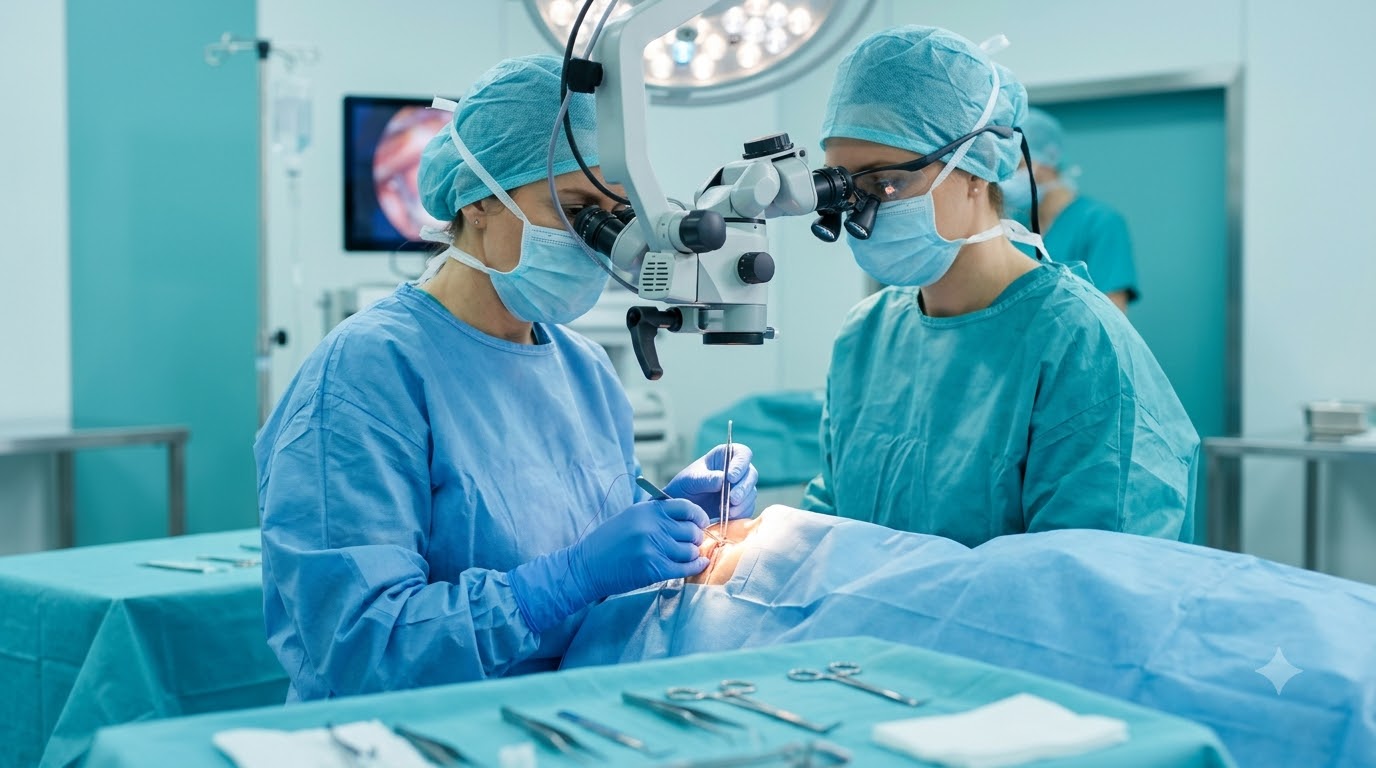
Squint Eye Surgery Treatment by Brit Indo Medical Concierge
- Squint eye surgery, medically known as strabismus surgery, is a procedure used to improve the alignment of the eyes when they do not point in the same direction.
- A squint may affect children or adults and can involve one eye or both eyes.
- The eyes may turn inward, outward, upward or downward, depending on the type of eye-movement problem.
- Squint treatment can involve glasses, eye exercises, patching, prisms, injections or surgery, depending on the underlying condition.
- Surgery generally works by adjusting the position or tension of specific eye muscles to improve eye alignment.
- The purpose of surgery may include improving eye alignment, supporting binocular vision and, in selected cases, improving abnormal head posture or double vision.
- Brit Indo Medical Concierge helps international patients from the UK, Europe, Canada and other countries coordinate planned eye treatment in India.
- Support can include ophthalmologist consultation, hospital appointment coordination, medical visa assistance, accommodation and international travel itinerary planning.
- The treating ophthalmologist determines whether surgery is appropriate after a detailed eye examination.
What Is a Squint?
- A squint, also called strabismus, occurs when the two eyes are not properly aligned.
- One eye may look straight while the other turns:
- Inward – esotropia
- Outward – exotropia
- Upward – hypertropia
- Downward – hypotropia
- The deviation may be constant or may appear only sometimes.
- Squint can develop during childhood or adulthood.
- Some people are born with a squint, while others develop it because of eye problems, neurological conditions, trauma or changes in vision.
- In children, untreated significant strabismus can contribute to amblyopia (lazy eye) because the brain may suppress the image from one eye.
- In adults, squint can sometimes cause double vision, difficulty with visual coordination or an abnormal head position.
- A comprehensive strabismus eye examination is needed to determine the type and cause.
Who May Need Squint Eye Surgery?
- Children with a persistent eye misalignment when surgery is recommended by a paediatric ophthalmologist or strabismus specialist.
- Adults with an eye turn that affects alignment, vision or appearance.
- Patients with double vision caused by eye misalignment.
- People with a squint that has not been adequately corrected using glasses or other non-surgical treatments.
- Patients with an abnormal head posture caused by eye misalignment.
- People with a long-standing squint who require surgical alignment of the eye muscles.
- Patients with recurrent strabismus after previous eye muscle surgery.
- Adults who develop strabismus following an eye injury, neurological condition or other medical problem may require specialist assessment before surgery.
- Not every squint requires an operation. The ophthalmologist first determines the cause and whether other treatment options may be appropriate.
Types of Squint Eye Surgery
Recession Surgery
- Muscle recession surgery weakens the action of a specific eye muscle.
- The surgeon moves the muscle attachment farther back on the eye.
- This reduces the muscle’s pulling effect.
- Recession may be performed on one or more muscles depending on the patient’s eye alignment.
Resection Surgery
- Muscle resection strengthens the action of an eye muscle.
- A section of the muscle is removed and the shortened muscle is reattached.
- This changes the muscle’s pulling force and can help improve eye alignment.
Recession and Resection Combination
- Some patients require a combination of recession and resection.
- One muscle may be weakened while another is strengthened.
- The combination depends on the direction and amount of eye deviation.
- Measurements taken during the pre-operative examination help the surgeon plan the operation.
Adjustable Suture Squint Surgery
- Adjustable suture surgery allows the surgeon to make certain muscle-position adjustments after the initial operation.
- It may be particularly useful for selected adults or complex cases.
- The ophthalmologist determines whether adjustable sutures are appropriate.
- It can provide an opportunity to fine-tune alignment after surgery in suitable patients.
Botulinum Toxin Treatment
- In selected cases, botulinum toxin injection may be considered as an alternative or supplementary treatment.
- The injection temporarily weakens a specific eye muscle.
- It is not suitable for every type of squint.
- A strabismus specialist determines whether this approach is clinically appropriate.
Approximate Squint Eye Surgery Cost – India vs UK vs USA
| Country | Approximate Private/Self-Pay Cost |
|---|---|
| India | ₹25,000–₹80,000+ |
| UK | £3,000–£7,000+ |
| USA | US$5,000–$10,000+ |
- Squint eye surgery cost in India varies according to the patient’s age, complexity, number of muscles treated, hospital and surgeon.
- Published Indian healthcare sources commonly report approximately ₹25,000–₹80,000 for strabismus surgery, although complex cases can cost more.
- The final quotation may be higher if multiple muscles, additional diagnostic tests or more complicated surgery are required.
- UK private strabismus surgery costs can vary significantly depending on the surgeon, hospital and complexity of the case.
- US private pricing can also vary according to whether surgery involves one or both eyes, the number of muscles treated and insurance arrangements.
- These figures are approximate planning ranges, not fixed quotations.
- Patients should obtain a detailed quotation covering:
- Surgeon fees
- Hospital or operating-room charges
- Anaesthesia
- Diagnostic examinations
- Medicines
- Follow-up visits
- Additional procedures if required
- International patients should confirm whether the quotation is for one eye, both eyes or the complete treatment episode.
Why Consider Squint Eye Treatment in India?
- India has specialised ophthalmology hospitals and strabismus clinics.
- Patients may have access to experienced paediatric ophthalmologists and adult strabismus specialists.
- Treatment can include both non-surgical and surgical approaches.
- Selected hospitals offer advanced diagnostic equipment for measuring eye alignment and binocular function.
- International patients can coordinate planned treatment through a medical concierge service.
- Published private treatment costs may be different from private healthcare prices in the UK and USA.
- Patients should consider:
- Specialist experience
- Hospital facilities
- Surgical technique
- Anaesthesia arrangements
- Postoperative follow-up
- Total treatment cost
- Treatment should be selected based on clinical suitability and quality of care, rather than price alone.
Before Squint Eye Surgery
- The patient undergoes a detailed strabismus assessment.
- The ophthalmologist measures:
- Visual acuity
- Eye alignment
- Amount and direction of deviation
- Eye movements
- Binocular vision
- Depth perception where appropriate
- Children may undergo additional tests to assess amblyopia or lazy eye.
- The doctor reviews the patient’s previous glasses prescriptions and treatment history.
- Adults with double vision may require additional neurological or eye investigations depending on the suspected cause.
- The specialist identifies which eye muscles need to be adjusted.
- The surgeon discusses:
- Proposed surgical technique
- Number of muscles involved
- Expected alignment
- Possible need for glasses
- Potential risks
- Recovery period
- Follow-up schedule
- Patients should provide information about previous eye surgery, medical conditions and medicines.
- International patients should carry previous eye reports, prescriptions, scans and surgical records.
- Brit Indo Medical Concierge can assist with ophthalmologist consultation, hospital coordination, medical visa assistance, accommodation and travel planning.
During Squint Eye Surgery
- Squint surgery is generally performed as a day-case procedure, although arrangements can vary.
- Children commonly receive general anaesthesia.
- Adults may receive local or general anaesthesia depending on the procedure, medical situation and surgeon’s recommendation.
- The surgeon exposes the eye muscle through the conjunctiva.
- The selected muscle is repositioned or adjusted to change its pulling strength.
- Procedures may involve one or multiple eye muscles.
- Recession moves a muscle farther back to weaken its action.
- Resection shortens a muscle to strengthen its action.
- Adjustable sutures may be used in selected patients.
- The surgeon checks the eye before completing the procedure.
- A protective dressing may be used depending on the surgeon’s preference.
- The patient is monitored after surgery before being discharged.
- The exact operation time depends on the number of muscles treated and the complexity of the case.
After Squint Eye Surgery and Recovery
- Mild redness of the eye is common after strabismus surgery.
- Patients may experience watering, irritation, mild discomfort or a gritty sensation.
- Use prescribed eye drops and medicines according to the surgeon’s instructions.
- Avoid rubbing or pressing the eyes.
- Follow instructions regarding:
- Swimming
- Exercise
- Contact sports
- Eye makeup
- Driving
- School or work
- Temporary double vision can occur while the brain adjusts to the new eye alignment.
- Eye redness may take several weeks to disappear completely.
- Children often return to normal activities relatively quickly, but the treating surgeon should confirm when activities can safely resume.
- Adults may require additional monitoring, particularly when surgery is performed to address double vision.
- Follow-up appointments are important to assess eye alignment and healing.
- In some cases, residual or recurrent eye deviation can occur and additional treatment may be required.
Benefits and Possible Risks of Squint Surgery
Potential Benefits
- Improved eye alignment.
- Better cosmetic appearance when the eyes are visibly misaligned.
- Potential improvement in binocular coordination for selected patients.
- Improvement of abnormal head posture in some cases.
- Possible reduction in double vision for appropriately selected adults.
- In children, successful alignment may support development or maintenance of binocular visual function.
- Surgery can be performed on children and adults when clinically indicated.
Possible Risks
- Temporary or persistent double vision.
- Residual eye misalignment.
- Recurrence of the squint.
- Overcorrection or undercorrection.
- Infection or inflammation.
- Bleeding.
- Scarring.
- Need for additional surgery.
- Rare complications involving the eye or surrounding tissues.
- The surgeon should explain the individual risks before treatment.
How Brit Indo Medical Concierge Supports International Patients
- Brit Indo Medical Concierge helps international patients coordinate planned squint eye surgery in India.
- Patients can share previous eye reports and treatment information.
- Assistance can include:
- Strabismus specialist consultation coordination
- Hospital appointment scheduling
- Medical visa assistance
- Accommodation coordination
- International flight itinerary planning
- Treatment schedule coordination
- Post-treatment travel planning
- Patients can discuss squint surgery options and expected outcomes directly with the treating ophthalmologist.
- Brit Indo Medical Concierge provides coordination and travel support but does not replace the treating medical team.
5 Frequently Asked Questions About Squint Eye Surgery
How much does squint eye surgery cost in India?
- The approximate squint eye surgery cost in India can range from around ₹25,000 to ₹80,000+.
- The final price depends on the number of muscles treated, surgical complexity, hospital, surgeon, anaesthesia and postoperative requirements.
- A personalised quotation should be obtained after examination.
Is squint surgery safe for children?
- Squint surgery in children is a commonly performed ophthalmic procedure when clinically indicated.
- As with any surgery, there are potential risks, including infection, overcorrection, undercorrection and recurrence.
- A paediatric ophthalmologist or strabismus specialist should assess the child and explain the expected benefits and risks.
Can adults have squint eye surgery?
- Yes. Adult strabismus surgery can be considered for eye misalignment, double vision, abnormal head posture or other clinically significant problems.
- Adults may sometimes be candidates for adjustable suture surgery, depending on the circumstances.
- The cause and stability of the squint should be assessed before surgery.
How long does it take to recover from squint surgery?
- Recovery varies between children and adults and depends on the number of muscles treated.
- Redness can remain for several weeks.
- Temporary discomfort and double vision may occur during the adjustment period.
- The ophthalmologist will advise when the patient can return to school, work, exercise, swimming and other activities.
Can international patients travel to India for squint surgery?
- Planned squint eye surgery in India can be arranged for international patients after appropriate specialist assessment.
- Patients should allow sufficient time for consultation, surgery and postoperative follow-up before returning home.
- Brit Indo Medical Concierge can assist with medical consultation, hospital coordination, medical visa assistance, accommodation and international travel planning.
- Sudden-onset squint with severe headache, neurological symptoms, sudden vision changes or significant double vision should receive urgent local medical assessment rather than waiting for planned medical travel.
Important Medical Disclaimer
- This content is for general squint eye surgery and medical tourism information and should not replace advice from a qualified ophthalmologist.
- Not every squint requires surgery, and treatment options vary according to age, cause, eye alignment and visual function.
- Squint surgery cost figures are approximate and can change according to the hospital, surgeon, number of muscles treated, anaesthesia, diagnostic tests and follow-up care.
- Patients should receive a complete examination and written treatment quotation before travelling.
- The treating ophthalmologist should make the final decision regarding surgery and expected outcomes.
- Squint Eye Surgery Treatment India
- Squint Eye Surgery India
- Squint Eye Surgery Cost India
- Squint Eye Surgery Cost UK
- Squint Eye Surgery Cost USA
- Squint Eye Treatment India
- Strabismus Surgery India
- Strabismus Treatment India
- Strabismus Surgery Cost India
- Squint Correction Surgery
- Eye Muscle Surgery India
- Eye Alignment Surgery
- Adult Squint Surgery India
- Children Squint Surgery India
- Paediatric Squint Treatment
- Paediatric Ophthalmologist India
- Adult Strabismus Treatment
- Esotropia Surgery
- Exotropia Surgery
- Hypertropia Treatment
- Eye Muscle Recession Surgery
- Eye Muscle Resection Surgery
- Adjustable Suture Strabismus Surgery
- Double Vision Treatment India
- Lazy Eye and Squint Treatment
- Eye Hospital India
- Ophthalmologist India
- Medical Tourism India
- Eye Surgery for International Patients
- International Patient Eye Treatment
- Brit Indo Medical Concierge
Reviews
There are no reviews yet.