
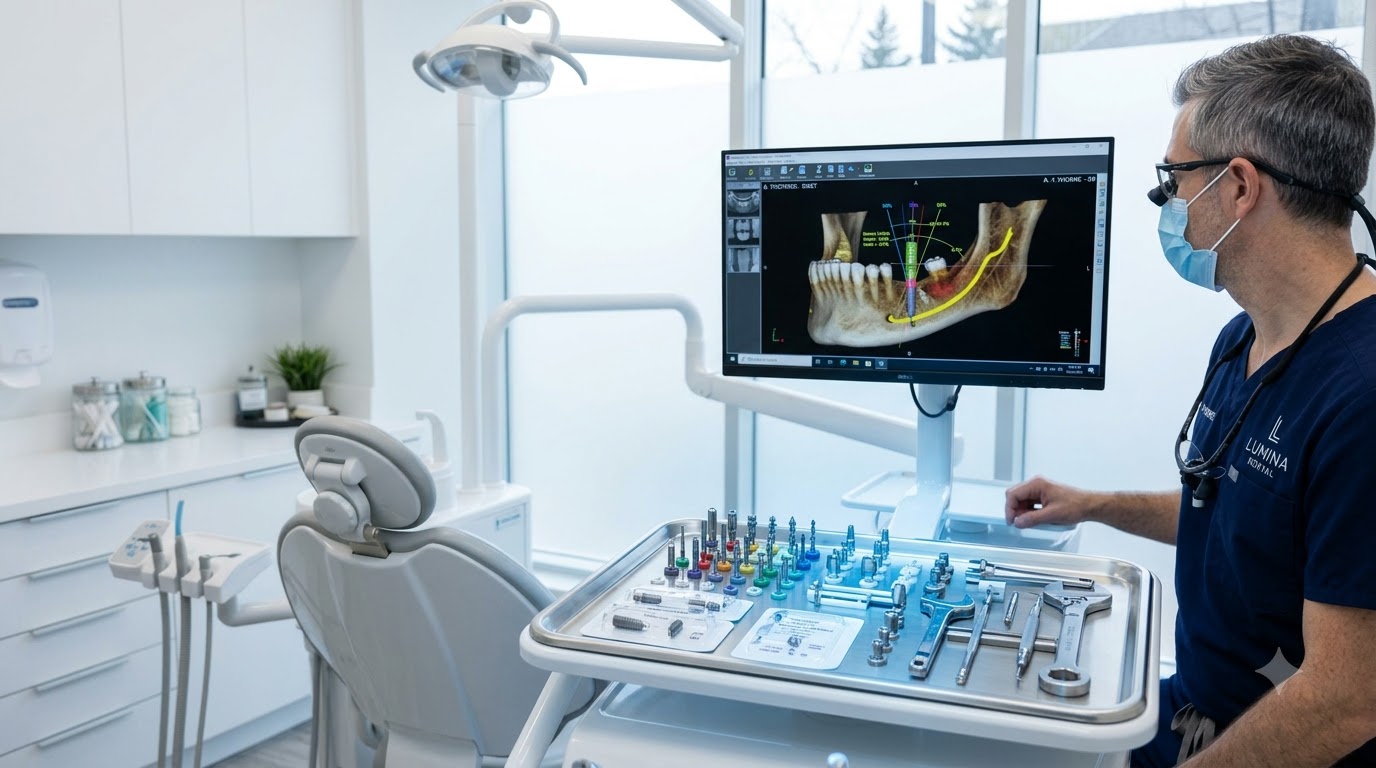
Dental Implant Treatment by Brit Indo Medical Concierge
- Dental implant treatment is a modern solution for replacing one or more missing teeth.
- A dental implant acts as an artificial tooth root, which can support a crown, bridge or implant-supported denture.
- Unlike a traditional bridge, an implant can replace the missing tooth without routinely relying on neighbouring teeth for support.
- Dental implants in India are increasingly considered by international patients because private treatment can be comparatively affordable while offering access to experienced implant dentists and modern dental clinics.
- Brit Indo Medical Concierge helps international patients coordinate dental implant treatment in India, including dental consultation, clinic arrangements, treatment estimates, accommodation, travel and medical-visa assistance where applicable.
- The suitability of implants depends on oral health, jawbone condition, gum health, medical history and the patient’s individual treatment requirements.
Who May Need Dental Implant Treatment?
- Patients with one or more missing teeth.
- People who have lost teeth because of decay, gum disease, injury or trauma.
- Patients who have difficulty chewing because of missing teeth.
- People looking for a fixed alternative to removable dentures.
- Patients who want to replace a missing tooth while preserving the appearance and function of their smile.
- People with loose or uncomfortable dentures who may benefit from implant-supported dentures.
- Patients requiring several implants to support a dental bridge or full-arch restoration.
- People with sufficient healthy jawbone to support an implant, or patients who may become suitable after bone grafting.
- Patients should have active gum disease or other oral-health problems treated before implant placement.
A dental examination and appropriate imaging, such as dental X-rays or CBCT 3D scanning, are generally used to assess bone and plan treatment.
Types of Dental Implant Treatment
Single Dental Implant
- A single tooth implant can replace one missing tooth.
- It usually consists of an implant fixture, an abutment and a dental crown.
- It can provide a fixed restoration that looks and functions like a natural tooth.
Multiple Dental Implants
- Multiple dental implants can replace several missing teeth.
- Implants may support individual crowns or an implant-supported bridge.
- The number of implants required depends on the location and number of missing teeth and the patient’s bone and bite conditions.
Full-Mouth Dental Implants
- Full-mouth dental implants can be used when most or all natural teeth are missing or cannot be predictably restored.
- Several implants may support fixed bridges or full-arch restorations.
- Treatment planning is particularly important for full-mouth rehabilitation.
All-on-4 Dental Implants
- All-on-4 dental implants use four strategically positioned implants to support a fixed full-arch restoration in selected patients.
- The technique may reduce the number of implants required compared with replacing every missing tooth individually.
- Suitability depends on bone availability, bite, gum health and the patient’s overall dental condition.
Implant-Supported Dentures
- Implant-supported dentures use dental implants to improve the stability of removable dentures.
- They can be useful for patients who experience movement or looseness with conventional dentures.
Bone Grafting Before Dental Implants
- Some patients do not have sufficient bone volume for immediate implant placement.
- Dental bone grafting may be recommended to rebuild or increase available bone.
- In the upper jaw, a sinus lift may sometimes be considered before implant placement.
- Additional healing time may be required after grafting.
Dental Implant Cost: India vs UK vs USA
The dental implant cost varies according to the implant brand, dentist’s experience, crown material, diagnostic scans, bone grafting requirements and complexity of treatment.
For initial planning, approximate private/self-pay ranges are:
| Country | Approximate Cost for One Dental Implant* |
|---|---|
| India | US$550–$1,500+ |
| UK – Private | £1,800–£4,200+ |
| USA – Private | US$3,000–$7,000+ |
*Prices can refer to different parts of the implant treatment, so patients should confirm whether the quotation includes the implant fixture, abutment, crown, consultation, scans and bone grafting.
- A 2026 published Indian guide reports approximately ₹45,000–₹85,000 for premium Straumann implants, depending on the implant system and clinical factors.
- A current UK private-dentistry guide places a single implant at approximately £1,800–£4,200, with higher prices possible in London and depending on the complexity of treatment.
- NHS dental charges are different from private implant prices. In England, NHS charges from 1 April 2026 are £27.90 for Band 1, £76.60 for Band 2 and £332.10 for Band 3. Dental implants are generally not routine NHS treatment and may only be available in limited clinical circumstances.
What Can Change Dental Implant Cost?
The final dental implant treatment cost in India can depend on:
- Number of missing teeth.
- Number of implants required.
- Implant brand and model.
- Titanium or other implant material.
- Type of dental crown.
- Dentist or implantologist’s experience.
- Dental laboratory charges.
- X-rays and CBCT scans.
- Bone grafting.
- Sinus lift surgery.
- Temporary teeth.
- Sedation or anaesthesia where required.
- Follow-up appointments.
- Treatment of gum disease or infection.
Always request an itemised dental implant quotation before travelling.
Why Consider Dental Implants in India?
- Dental implant treatment in India can be considerably more affordable than many private treatment options in the UK and USA.
- India has experienced implant dentists and oral surgeons in major cities.
- Many modern dental clinics use digital imaging and computer-assisted treatment planning.
- Patients can access different implant brands and restorative materials.
- Clinics may offer comprehensive treatment, including implants, crowns, bridges, bone grafting and full-mouth rehabilitation.
- English-language communication is widely available in many private dental clinics.
- International patients can combine dental treatment with organised medical travel to India.
- The final decision should be based on dentist qualifications, implant quality, sterilisation standards, aftercare and the complete treatment plan—not simply the lowest price.
Before Dental Implant Surgery
Dental Consultation and Assessment
Before dental implant surgery, the dentist may:
- Examine the teeth and gums.
- Review the patient’s medical and dental history.
- Check the condition of neighbouring teeth.
- Assess the patient’s bite.
- Take dental X-rays.
- Recommend a CBCT 3D scan when detailed bone assessment is required.
- Assess jawbone volume and density.
- Check for gum disease or infection.
- Discuss available implant options.
- Explain expected treatment stages and recovery.
- Provide an estimated treatment cost.
Active gum disease, untreated infection or insufficient bone may need to be addressed before implant placement.
Preparing for Medical Travel to India
International patients can prepare by:
- Sending previous dental records and X-rays.
- Arranging an online dental consultation.
- Sharing photographs of the teeth when requested by the clinic.
- Receiving a preliminary treatment plan.
- Confirming implant brand and crown material.
- Requesting an itemised quotation.
- Planning the required number of appointments.
- Arranging medical visa assistance, where applicable.
- Booking flights and accommodation.
- Organising airport transfers and local transportation.
Brit Indo Medical Concierge can assist with these non-clinical arrangements.
During Dental Implant Treatment
The treatment process varies depending on the patient’s condition.
Implant Placement
- Local anaesthesia is normally used for implant placement.
- The dentist or oral surgeon prepares the area in the jawbone.
- The dental implant fixture is carefully positioned in the bone.
- The implant may be covered during healing or fitted with an appropriate component depending on the treatment plan.
- Temporary teeth may be provided when clinically appropriate.
Osseointegration and Healing
- The implant gradually bonds with the surrounding jawbone through a process called osseointegration.
- Healing time varies between patients.
- The dentist monitors the implant before proceeding to the final restoration.
- Patients requiring bone grafting may need additional healing time.
Abutment and Crown Placement
- Once the implant has adequately integrated, an abutment connects the implant to the restoration.
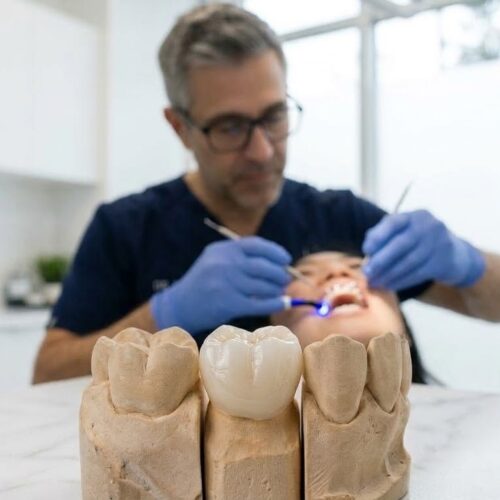
- A custom-made dental crown is then attached.
- The dentist checks the bite, shape, colour and function of the restoration.
- For multiple implants, bridges or full-arch restorations may be fitted according to the treatment plan.
After Dental Implant Treatment
Immediate Recovery
- Mild swelling, discomfort or bruising may occur after implant surgery.
- Follow the dentist’s instructions regarding pain medication and oral hygiene.
- Avoid disturbing the surgical area.
- Follow any recommended dietary restrictions.
- Avoid smoking because it can negatively affect healing.
- Attend the scheduled dental follow-up.
Dental Implant Care
- Maintain excellent oral hygiene after dental implants.
- Brush according to your dentist’s instructions.
- Clean between teeth and around implants appropriately.
- Attend regular dental and hygiene appointments.
- Avoid biting excessively hard objects.
- Report persistent pain, swelling, mobility or other unusual symptoms to the dentist.
Long-Term Dental Implant Maintenance
- Dental implants require ongoing care even though they cannot develop tooth decay like natural teeth.
- The surrounding gums and bone can still develop disease.
- Regular professional cleaning and dental examinations are important.
- Good oral hygiene can help support the long-term health of the implant and surrounding tissues.
Benefits and Possible Risks of Dental Implants
Potential Benefits
- Replacement of missing teeth.
- Improved chewing function.
- Fixed alternative to removable dentures in suitable cases.
- Natural-looking dental restoration.
- Support for bridges or full-arch restorations.
- Restoration of confidence when smiling and speaking.
- May help preserve the jawbone around the implant area.
Possible Risks
Like any surgical treatment, dental implant surgery has potential risks, including:
- Infection.
- Swelling or discomfort.
- Bleeding.
- Implant failure or lack of integration.
- Gum inflammation around the implant.
- Bone loss around an implant.
- Nerve injury in certain anatomical situations.
- Sinus-related complications for some upper-jaw procedures.
- Need for additional surgery or treatment.
The individual risks depend on the patient’s health, anatomy, oral hygiene and treatment complexity.
How Brit Indo Medical Concierge Supports International Dental Patients
Brit Indo Medical Concierge can help coordinate:
- Initial dental implant treatment enquiry.
- Collection of dental reports and scans.
- Dental implant specialist consultation.
- Clinic coordination.
- Treatment estimate assistance.
- Appointment scheduling.
- Implant and restoration information.
- Medical visa assistance, where applicable.
- International flight planning.
- Hotel or accommodation coordination.
- Airport transfers.
- Local transportation.
- Follow-up appointment coordination.
- Return-travel planning.
Brit Indo Medical Concierge acts as a medical tourism consultant and coordinator. Diagnosis, implant selection, surgery and clinical care remain the responsibility of the qualified dentist or oral surgeon.
Frequently Asked Questions About Dental Implant Treatment
1. How much does a dental implant cost in India?
- The dental implant cost in India can vary widely depending on the implant brand, crown, dentist, scans and additional procedures.
- A 2026 published Indian guide reports approximately ₹45,000–₹85,000 for Straumann implant systems, although the complete treatment cost can be higher when the abutment, crown, scans or bone grafting are included.
2. Is dental implant treatment cheaper in India than the UK and USA?
- Generally, dental implants in India can be considerably less expensive than private implant treatment in the UK and USA.
- Current UK private estimates put a single implant around £1,800–£4,200, while US private treatment can commonly reach several thousand dollars.
- Patients should compare the complete treatment package rather than the implant price alone.
3. How long does dental implant treatment take?
- The timeline depends on whether bone grafting is needed, the patient’s healing, implant stability and the type of restoration.
- Some straightforward cases can be completed relatively quickly, while cases requiring bone grafting or extensive rehabilitation may take several months.
- The dentist should provide an individual treatment timeline before travel.
4. Are dental implants painful?
- Local anaesthesia is used during implant placement, so significant pain during the procedure is generally not expected.
- Some patients experience temporary swelling, soreness or discomfort after surgery.
- Prescribed or recommended pain management and post-operative instructions should be followed.
5. Can Brit Indo Medical Concierge arrange dental implant treatment in India?
- Yes. Brit Indo Medical Concierge can assist international patients with dental consultations, clinic coordination, treatment estimates, medical visa assistance, flights, accommodation and local transportation planning.
- The selected dental clinic remains responsible for diagnosis, treatment and clinical aftercare.
Plan Dental Implant Treatment in India with Brit Indo Medical Concierge
- Dental implant treatment in India can be an option for international patients looking for a fixed solution for missing teeth.
- The right treatment depends on jawbone health, gum condition, number of missing teeth, bite, general health and treatment goals.
- Patients should receive a professional dental examination and detailed treatment plan before travelling.
- Always confirm the implant brand, crown material, number of appointments, bone-grafting requirements and complete treatment cost.
- Brit Indo Medical Concierge helps international patients coordinate the journey from dental consultation and clinic arrangements to treatment, accommodation and return travel.
Dental Implant Treatment India, Dental Implant Cost India, Dental Implants India, Dental Implant Surgery India, Dental Implant Clinic India, Single Tooth Implant India, Full Mouth Dental Implants India, All-on-4 Dental Implants India, Dental Tourism India, Medical Tourism India
dental implant surgery, implant dentistry, missing teeth treatment, single tooth replacement, implant-supported bridge, implant-supported dentures, full-mouth rehabilitation, All-on-4 treatment, dental crown, dental implant fixture, implant abutment, osseointegration, bone grafting, sinus lift, CBCT dental scan, gum disease treatment, oral surgeon, implantologist, dental implant recovery, dental implant aftercare, international dental patients, medical travel to India, medical visa assistance.
Reviews
There are no reviews yet.